Could Mary Peltola's Scandal Tip Balance of Senate Power?
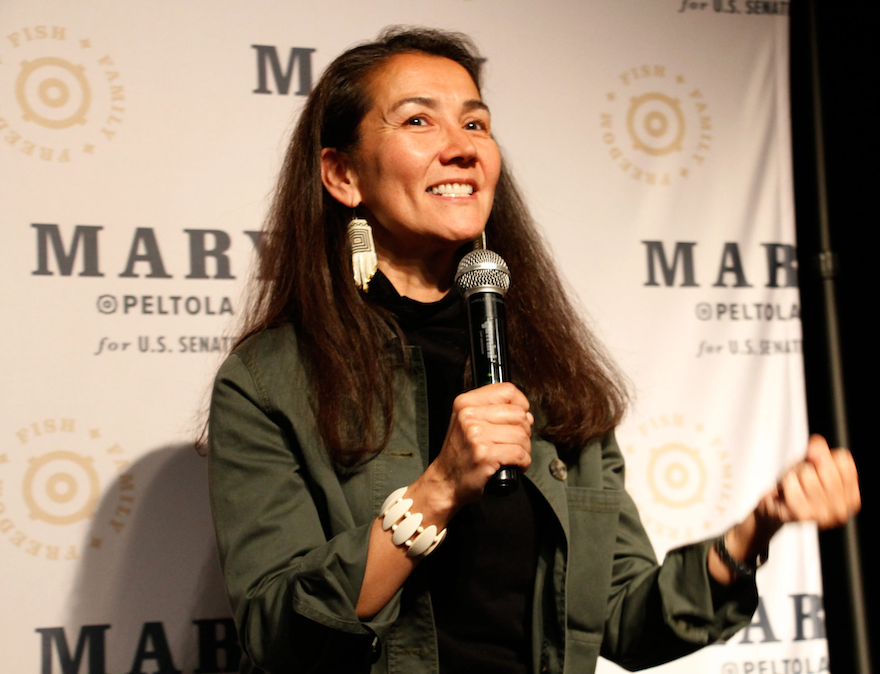
By Sean Trende
Scandals in America are weird. Sometimes, candidates are sunk by the stupidest whiff of misbehavior. Sometimes, candidates survive accusations that surely should end a political career. I’ve always thought that whether a scandal stuck or not depended on the reason people hire you to do the job in the first place. Someone like Bill Clinton or Donald Trump weathered scandals in part because America has always loved a good rogue and in part because those candidates were nominated despite their personal failures. Say what you will about a Clinton or Trump voter, they probably weren’t supporting these candidates because of their moral virtues to begin with. Other candidates, however, get elected because they “aren’t politicians,” are outsiders, or will clean up Washington. For them, the standard is different.
Which brings us to Mary Peltola. The New York Times reports today that Mary Peltola’s campaign attempted to find and recruit a candidate named “Dan Sullivan” to appear on the ballot. This wasn’t accidental, as “Dan Sullivan” is the name of the state’s junior senator. It was always a bit harebrained, as Alaska uses ranked choice voting, where voters can rank all of the candidates by preference. If you are unsure which Sullivan to vote for, just rank them first and second (the “real” Dan Sullivan is also plainly marked as “incumbent” on the ballot).
But not everyone really understands ranked choice voting. It’s a quirky, new system. There are always people who simply vote for one candidate and leave others unranked (so-called “ballot exhaustion”). Or there might be voters who want to punish “Other Dan Sullivan” by placing him below Peltola, but instead accidentally rank the Senator beneath her. These voters are likely few and far between, but in a close race, it could matter. In fact, that’s possibly at least part of how Peltola won in 2022. Some 11,290 ballots cast for Republican Nick Begich named no second choice and effectively disappeared when he was eliminated, more than twice the 5,240 votes Peltola won by.
In the world of campaign scandals, this is a relatively small infraction and something with precedent, as the Times story explains. This is something of the consensus in Election Twitter today: that in the greater scheme of things, this is no big deal.
In most cases I’d agree, but this one might be different. The problem gets back to the distinction I raised above. Something like this wouldn’t dent Bill Clinton or Donald Trump, who people knew were flawed.
Peltola’s campaign is centered on the idea that she isn’t just another politician. Anti-corruption, “Alaska first, party second,” and not being a career politician are central to her image.
Mary Peltola is different. First, she is running in a state with deep red DNA. The state has sent two Democrats to Washington since the 1970s, both under unusual circumstances (Peltola, the state’s member of Congress from 2022 to 2025, is one of those two). For a Democrat to win an election there requires pretty much everything to go right. She really didn’t need to be discussing this the weekend before the election.
Second, the cynical election analyst response—that this is just what politicians do—is probably correct. But that’s exactly the problem: Peltola’s campaign is centered on the idea that she isn’t just another politician. Anti-corruption, “Alaska first, party second,” and not being a career politician are central to her image. The headline on her homepage yells “To Hell with Politics…Put Alaska First.”
For a candidate who is running explicitly on a promise to “unrig the system” (in her X candidate bio) to get accused in the New York Times, with text messages to back it up, of literally trying to game Alaska’s unique RCV system after denying that charge repeatedly (and still denying it) really is a problem. To win as a Democrat in Alaska you almost have to be viewed as a quasi-independent non-politician. Peltola had been executing the type of campaign that builds that image flawlessly.
Now, that image is tarnished. In fact, the most damaging accusations might be the campaign’s apparent attitude toward Alaska’s voters. In texts obtained by the Times, one consultant watching a focus group wrote “Do we have a scheme for you,” while a pollster flagged a participant as the ideal mark for the ballot plan. It certainly doesn’t help that Senator Lisa Murkowski, the state’s maverick-y Republican who leverages the ranked choice system herself, absolutely blasted Peltola in a statement this afternoon, accusing her of a “pattern of lies and coverups.”
People wonder “who will really cast votes on something like this at this point?” My answer: the sliver of voters who are still trying to make up their minds. Voters who are either Republicans trying to decide between party loyalty and a reasonably popular former representative, voters who are non-ideological and who vote on things like candidate image, voters who really believed Peltola was different. Do I think it will matter a lot? No, not really. But this is a race that is close, with Peltola leading by around a point. Like many races this year, it could be decided by a razor-thin margin. She won by around 5,000 votes in 2022. Do I think this could sway 2,500 voters? Probably? In that circumstance, this is something that could really matter. One thing is for certain, the Sullivan ads are being cut as I write this, and this will be a large theme of his final push.
Original Here

|
⭐⭐⭐⭐⭐