The Two Immortalities of Dracula
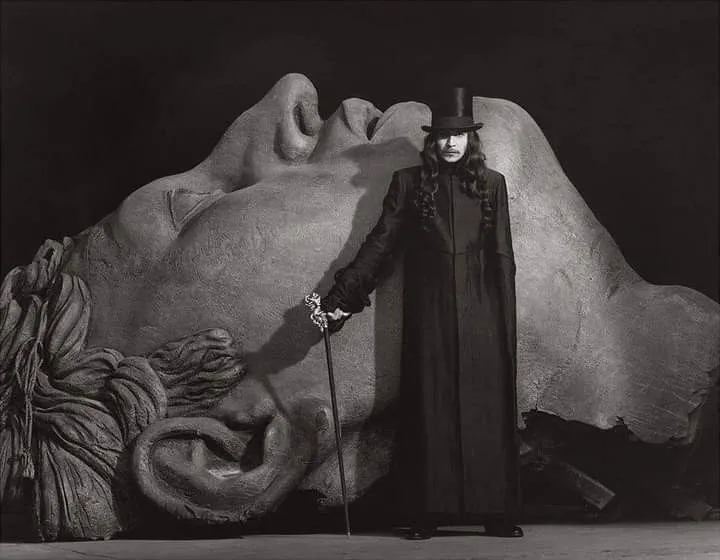
All vampire stories present only one form of immortality, except Bram Stoker’s Dracula, which reminds us that there are two. This simple fact helps us understand the core metaphysical motivation of the modern vampire story and why the modern story tends to present the vampire as someone attractive and beautiful rather than repulsive and vulgar. Modern vampire stories (written after the 1950s) are not truly gothic because they only carry forward half the tradition, which is a fascination with death and if they carry anything of the other half, Christianity, it is only as in an atheistic or blasphemous way.
The true gothic tradition of the Victorians, which produced the original Dracula, was also intensely Christian. The idea of eternal life is always attractive to us because this is what we all desire on a very human level by virtue of having immortal souls. But in Bram Stoker’s 1897 novel, Dracula, the characters, by virtue of their Christian faith, already have access to another form of immortality.
“I believe in…
the communion of saints,
the forgiveness of sins,
the resurrection of the body,
and life everlasting. Amen.”
- An excerpt from the Apostle’s Creed, or, the Creed of the Christian Faith
But this is a side of the vampire story that is hardly ever discussed, not merely in Hollywood adaptations, but also not in mainstream literary criticism and discussion of this core gothic text. All vampire stories discuss the allure of the demon’s un-dead immortality; Stoker not only includes the immortality offered by Christ in heaven, but makes it the central motivation of the entire story. And this profoundly changes the way we understand the nature of Gothic Heroism and Vampire Mythology. As Halloween approaches, many people are indulging in stories about ghosts, vampires, werewolves and all things paranormal and supernatural…I invite you to a deep dive on this subject from a perspective you’re unlikely to hear anywhere else. For Bram Stoker tells us something crucial to equip us for our earthly battles, “the world seems full of good men, even if there are monsters in it” (Stoker, Dracula, pg 229).

Gothic Story versus Modern Wish-Fulfillment
In the modern vampire stories, the nosferatu are sexy, attractive and alluring and so human-like that they fit in almost effortlessly with human society. The vampires in these modern stories have almost no weaknesses, least of all religious ones. These stories dismiss completely or seriously diminish the consequences of becoming a vampire. In Meyer’s Twilight, only Rosalie Cullen warns Bella Swan of the heartache of not being able to have her own children as a consequence of being a vampire. Bella Swan seems to not care about this at all. Edward Cullen is vaguely concerned with Bella Swan’s soul but his concerns are quickly discarded as old-fashioned superstition. Both the Vampire Diaries (2009) and Anne Rice’s Interview With a Vampire (1976) similarly deal with religious consequences of vampirism as mere superstition (ironic considering the vampire myth itself is superstition).
In a decadent society in which people are obsessed with the strength and beauty of youth, and want to cling to it greedily forever, no matter the cost, it is not a surprise they should be so attracted to vampirism. They desire their youth and beauty even at the cost of their own soul, even at the cost of having to take the lives of others. It is an interesting paradox few consider: because they do not believe they have a soul at all, they think nothing of exchanging it. But the soul is the very thing that allows them to love or experience joy or peace in the first place so any exchange for a soul will necessarily always be a disappointing one.

Bram Stoker’s story, however, is unique because it depicts the realities of the consequences of corrupting one’s soul in exchange for a bastardised immortality of being an un-dead demon. By “real” here I mean that Stoker’s vampire mythology works within the logic of Christianity whereas modern vampire mythology takes complete liberties in order to make its vampires however they want. When the vampire mythology is not placed in the logic of Christianity, the gothic element is removed because the reader is no longer engaged in a serious contemplation of mortality any longer, but rather in a contemplation with the author’s personal cult mythology. Modern vampire stories deal not with vampirism, but a fantasy of a world without morality in which the vampire is nothing but wish-fulfillment. Bram Stoker, I argue, didn’t just write the best vampire story, he wrote the only real gothic vampire story.

Blood-Lines
The life of the Un-Dead, in true gothic mythology, is one that lacks all vitality and that is what lends it its terror. Although the vampire is strong and powerful, able to change into mist or bats or wolves, he is barren. The point so quickly dismissed in Twilight, Vampire Diaries and other modern stories, is essential to Dracula. There can be no marriage for vampires because their primary loyalty is always to their lust for blood so a vampire falling in love violates the logic of its own mythology and turns vampirism into nothing more than comic book super-powers. Modern vampire stories do not deal with the metaphysical consequences and horror of a creature who must take human souls to live. Bram Stoker explores the difference between animal and human life in the character of Dr. Seward’s mental patient, Renfield, but in order to explore this properly, I must dedicate a separate essay to him.
Dracula speaks of his “noble blood” to Jonathan Harker in the beginning of the novel. “We Szekelys have a right to be proud, for in our veins flows the blood of many brave races who fought as the lion fights” (Stoker, 32) and, “What devil or what witch was ever so great as Attila, whose blood is in these veins?” (Stoker, 33) and “We of the Dracula blood were amongst their leaders” (Stoker, 33). The irony of this scene is that the Count has not a drop of Dracula blood in his veins; the true Dracula blood dried up centuries before when he first died, and in his veins runs the blood he steals from the helpless peasants around him in Transylvania. Dracula himself has no Dracula blood. The noble race he claims to belong to can leave no legacy because he is its (Un)Dead end, unable to have children to pass on his blood to. Dracula, by virtue of being nosferatu, has ended the bloodline in which he finds his pride.
In Bram Stoker’s Dracula, the vampire stalks the living existing in a kind of hell on earth, not in a cheerful immortality of endless money, fun and romance. The consequences of being Un-Dead are that they must spend the rest of their days committing murder after murder just to subsist. Most tragic of all is that they are always separated from God, the definition of the word despair, and the gates of heaven are closed to them. Never can they feel the eternal and perfect love of God that is more life than life itself, more love than any earthly love. There is not a single moment in Bram Stoker’s Dracula when the Count is actually happy or peaceful. In fact his countenance is one of continued hate and anger, “As we burst into the room, the Count turned his face and the hellish look that I had heard described seemed to leap into it. His eyes flamed red with devilish passion; the great nostrils of the aquiline nose opened wide and quivered at the edges; and the white sharp teeth behind the full lips of the blood-dripping mouth, champed together like those of a wild beast” (Stoker, 288). It is only in his final moments, after Jonathan Harker has stabbed Dracula’s heart with a stake, and before he turns into ash, that he has anything like an expression of peace. “I shall be glad as long as I live that even in that moment of final dissolution, there was, in the face, a look of peace, such as I never could have imagined might have rested there” (Stoker, 384). The true gothic reminds us that the vampire’s evasion of death is merely an illusion and that his life, stolen through the blood he has taken from his victims, is a living death full of hatred, anger, despair and barrenness.
The reason the Vampire can only win a parody of the immortality that God offers to us is the logic of the blood sacrifice itself which is at the centre of Christianity. When Jesus Christ died, his sacrifice produced eternal life for all humanity. The vampire, feeding only on the blood of mere humans, cannot equate a thousand bodies to that of the blood of Christ.
This leads us to the discussion of what is truly at stake when Dracula threatens to turn Mina into one of the nosferatu and the central motivation of Bram Stoker’s entire novel: to rescue Mina Harker’s immortal soul.

Mina Harker’s Immortal Soul
One dark and stormy night, Count Dracula attacks the beautiful and virtuous Mina Harker and forces her to drink his blood, threatening to dash her beloved husband’s brains out on the wall if she should attempt to refuse him. This heinous violation links Mina Harker to the destiny of becoming one of the nosferatu herself should she die. Dr. Van Helsing explains the full extent of the consequences of this episode and what should happen if they fail to annihilate Count Dracula.
“But to fail here is not mere life and death. It is that we become as him–without heart or conscience, preying on the bodies and souls of those we love best. To us forever are the gates of heaven shut; for who shall open them to us again? We go on for all time abhorred by all; a blot on the face of God’s sunshine; an arrow in the side of Him who died for man” (Stoker, 242).
The primary motivation of the protagonists in Dracula is to rescue Mina Harker from the fate of a demonic immortality and restore her access to the heavenly one. It is precisely because there are two immortalities fighting against each other that the human characters have any chance at victory. If Mina Harker were only interested in evading Dracula out of an ordinary squeamishness at being killed, the story would not progress past the point of driving the Count out of London. But the group continue to pursue Dracula into the hinterlands of Romania where he has every advantage over them, precisely because there is so much more at stake than merely Mina’s earthly, mortal life. It is Mina’s immortal soul that has been violated, not just her earthly body.
The final words of the novel are a testament to this fact. When speaking to Mina Harker’s son, Van Helsing remarks that “later on he will understand how some men so loved her, that they did dare much for her sake” (Stoker, 386). By rescuing Mina, she is able to have all that Dracula never could: she has children and continues her blood line.
In the end, Stoker’s novel insists that the true Gothic is not a romance with death but a contest between two immortalities, and that only one of them can be called life. The vampire’s un-death is a sterile parody of strength without generation, duration without peace, appetite without love, a closed bloodline that can only steal what it can never beget. Against it stands the immortality already possessed by the living characters through faith in Jesus which makes Mina’s soul worth pursuing into Transylvania and makes the group’s victory more than a medical or military success. When the Count’s face finally shows peace only in the instant of dissolution, and when Mina lives to bear a child, the novel completes its argument: the greater eternity is not the one that evades the grave but the one that passes through it. Modern vampire stories, by offering only the first immortality and treating the second as superstition, keep the costume of the Gothic while discarding its metaphysical heart.
I have so much more to talk about with this incredible novel such as why they generated a love story between Mina Harker and Dracula in the film adaptation, the heroism of Mina Harker, and why modern depictions of vampires so depart from the hideousness and ugliness of the original. But I will save these essays for another day.
Original Here
|
⭐⭐⭐⭐⭐