The Nightmare Scenario That Could Ground Israel's Air Power
 By Hodaya Busheri
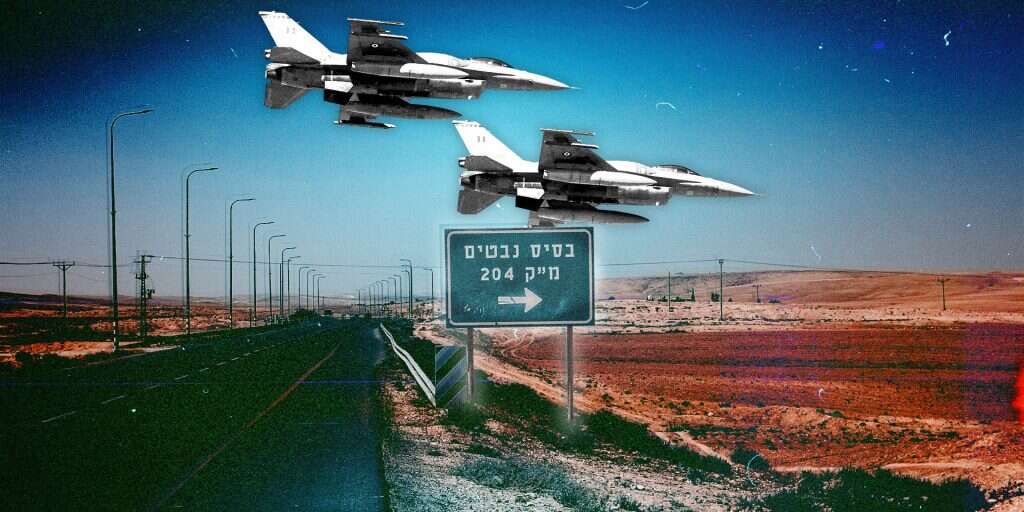
A new document prepared with the involvement of former senior security and law enforcement officials and published Thursday, warns of a strategic vulnerability in the heart of the Negev in southern Israel. At the center of the warning is the possibility that, during a war, several threats that have each materialized separately in the past could converge in the same place at the same time.
The scenario describes a dangerous combination of an estimated 100,000 to 130,000 illegal weapons and other arms, including rifles, machine guns, grenades and explosive devices, along with nationalist extremism and Iranian direction, near Israeli military bases and other strategic infrastructure.
The danger is compounded by past events. Reserve pilots called up to Nevatim Air Force Base during Operation Guardian of the Walls in May 2021 nearly faced a lynching on their way there, while the nearby community of Nevatim was effectively cut off for about 24 hours. The State Comptroller has documented a bullet penetrating the base and striking an aircraft wing, drones entering the base and a woman from the nearby Bedouin diaspora who allegedly operated on Iran's behalf. Tehran has sought intelligence on aircraft takeoffs, while weapons continue to flow into the Negev.
"Iran does not need an army in the Negev. It needs three things: eyes on the bases, readily available weapons in the area, and a population of which some are willing to act. It is building all three in parallel." That stark sentence appears in the new document, revealed here in Israel Hayom for the first time, titled "The Nevatim Perimeter: Reference Scenario."
Not an imaginary scenario
The people behind the document come from the very systems tasked with understanding the threat, the intelligence statues and southern Israel itself. Its cover lists four former senior security and law enforcement officials: Ilan Lavi, former head of the Shin Bet security agency's Southern District; retired Israel Police Brig. Gen. Moti Edri, former deputy commander of the Southern District; retired Israel Prison Service Brig. Gen. Ilan Borreda, a former head of the prison service's Intelligence Division; and IDF Brig. Gen. (res.) Fares Atilla, former head of the Civil Administration.
The report's central argument is as simple as it is troubling: Almost none of the elements in the scenario it presents are hypothetical.
Nevatim has already been targeted in Iranian missile attacks. Iranian intelligence operatives have already recruited Israelis to photograph military bases. In July 2025, Tahani Abu Samhan, a resident of the Bedouin diaspora near Nevatim, was indicted on allegations that she had been operated by Iranian intelligence and tasked with collecting information on the base. The April 2026 State Comptroller's report documented gunfire penetrating Nevatim and striking an aircraft wing, along with drones entering the base. At the same time, police officials estimate that some 130,000 illegal weapons and other arms are circulating in the Negev.
To understand the scale of the exposure to this threat, it is necessary to understand the area surrounding these bases. According to the report, about 28% of the Negev's Bedouin population lives outside recognized communities in the dispersed settlements commonly known as the Bedouin diaspora. The State Comptroller estimated this population at roughly 70,000 to 90,000 people, while the Southern District police commander has previously put the figure at more than 100,000, stressing that there is no up-to-date population census.
The report says there are some 2,500 to 2,600 unregulated residential clusters spread across a vast area and along Routes 25, 31, 40, 60 and 80, some immediately adjacent to military bases and strategic infrastructure. The air force's bases are not located in isolated areas, but within a vast and complex civilian mosaic.
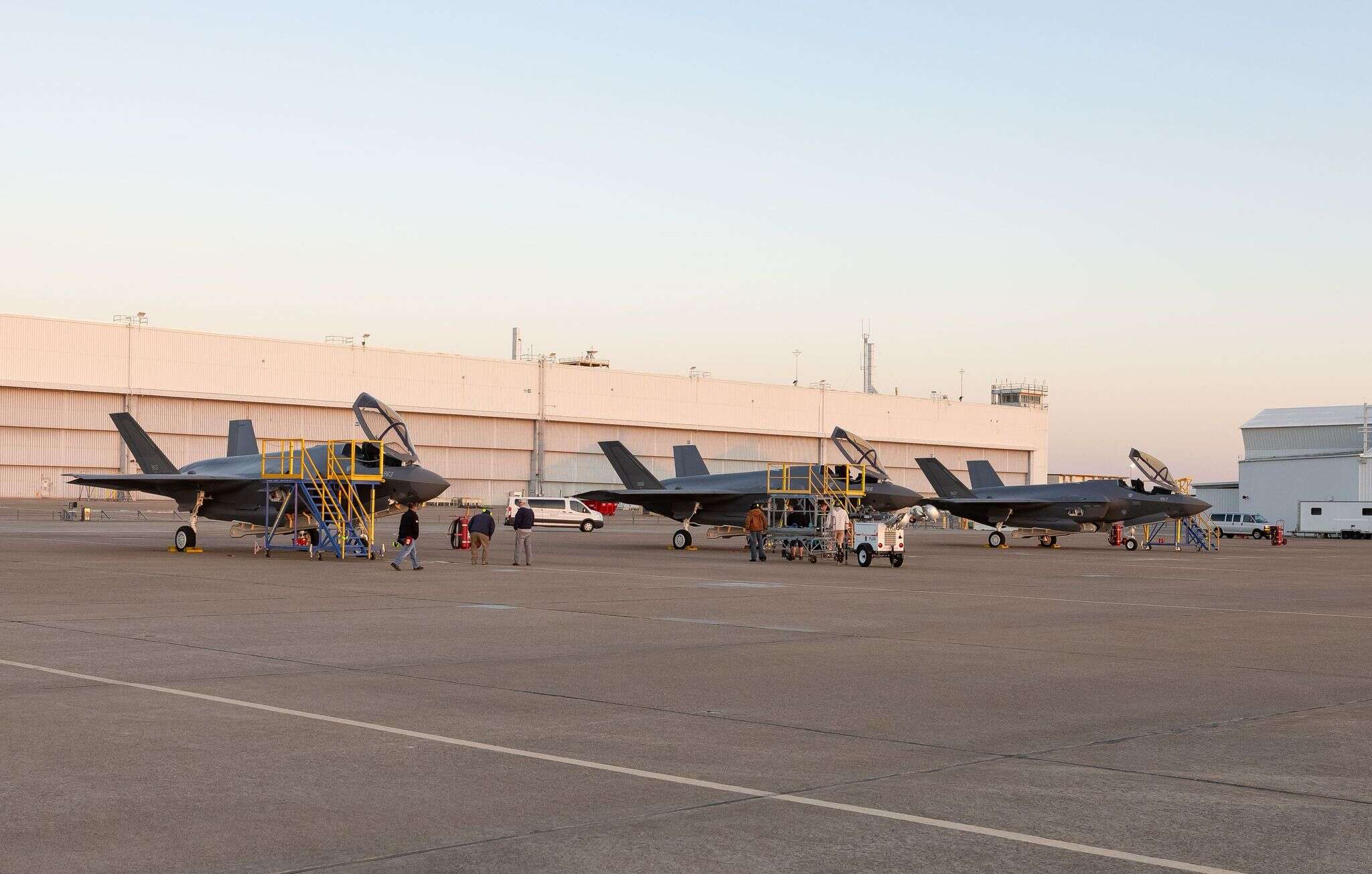
At the heart of the issue are the Israeli Air Force's bases in the Negev, above all Nevatim, which hosts several F-35 squadrons, heavy transport squadrons and the prime minister's official aircraft, as well as nearby Hatzerim Air Force Base. The report also addresses the area surrounding Ramon Air Force Base, Tze'elim and other strategic facilities in the Negev. In practice, a significant portion of Israel's air power depends on bases in this region.
The operational question
This is where the nightmare scenario becomes an operational question: What happens if, just as Israel is preparing a wave of strikes in Gaza, Lebanon or Iran, one of its principal air bases cannot function normally?
A military base does not have to be captured to have part of its capabilities neutralized. According to the reference scenario, blocking access roads, firing from a distance at aircraft on the flight line, using drones and damaging several parked aircraft could be enough to remove them from the sortie cycle for hours or days.
Every damaged aircraft must be inspected, serviced and sometimes undergo complex repairs before returning to operations. When advanced and exceptionally expensive aircraft are involved, even damage that does not destroy a plane can carry a heavy financial cost and, more importantly, take a valuable operational asset out of action at precisely the moment it is most needed.
The question is not only how much the damage to an aircraft is worth, but what an hour in which it cannot take off is worth. Air superiority is one of the core capabilities on which Israel relies in a multi-front war. A base whose takeoff capacity is partly disabled, pilots who cannot reach it, or aircraft pulled from the sortie cycle for inspection are no longer a local incident in the Negev. They can affect combat capability across an entire theater.
The report therefore defines the most significant damage not by the number of aircraft destroyed, but by takeoffs being halted at the height of a war, the base being cut off from the rear and the pace of sorties slowing.
The danger of another Guardian of the Walls
One of the report's most serious claims concerns the availability of weapons across the Negev. Even if most illegal weapons being smuggled today are used for crime rather than terrorism, their mere presence on the ground creates an advantage for an adversary: "There is no need to smuggle weapons in on the day of reckoning. They only need to be activated."
One person closely involved in the issue in recent years is Hagai Reznik, a founder of the Rifman Institute for the Development of the Negev and a former chairman of the institute. He says the danger lies in the geography. "The Negev lives between the Gaza Strip and Hebron," Reznik said. Between those two areas are the air force bases and other Israeli strategic facilities that are expected to continue functioning in wartime.

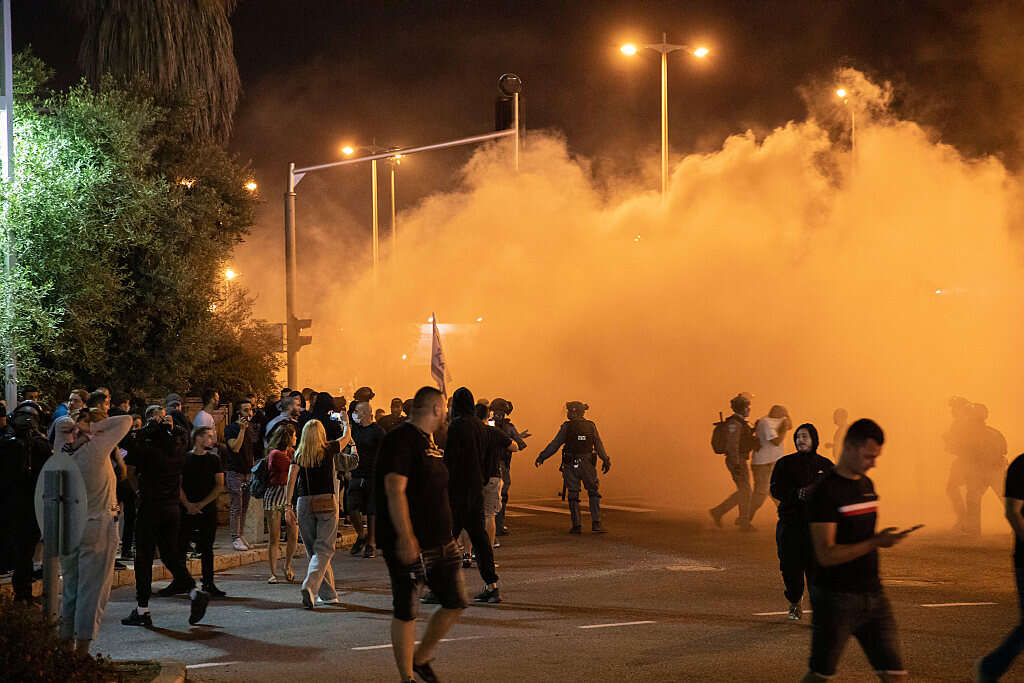
That is where Operation Guardian of the Walls returns to the picture. In May 2021, while Israel was fighting in Gaza, rioting and violence in the Negev focused in part on intercity roads and at times disrupted travel between the north and south. Electricity and lighting poles were brought down onto roads and traffic across the south was disrupted. According to the report, a senior police officer later told Knesset members that strategic State of Israel facilities were blocked during Guardian of the Walls.
Reznik says that pilots had to reach Nevatim under security escort during those days and that the community of Nevatim itself was, in his words, under siege for about 24 hours. He does not claim there was Iranian direction at the time, and explicitly says he has no information indicating that there was. Rather, he views Guardian of the Walls as an example of the ability to disrupt roads and impede access to a strategic asset in real time.
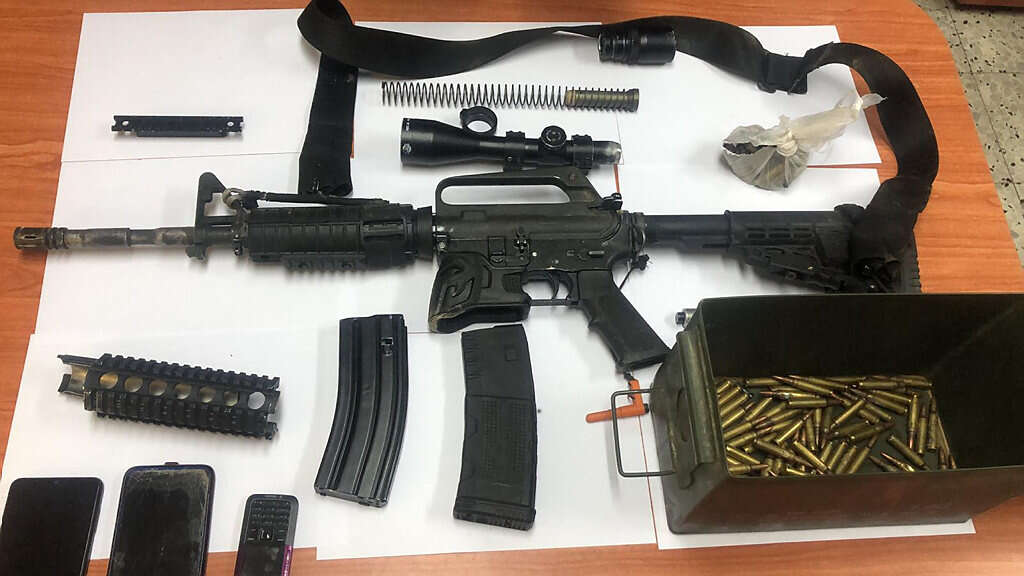
The figures compiled by the report illustrate the scale of the weapons stockpile. Alongside the police estimate of roughly 130,000 illegal weapons and other arms, the Rifman Institute estimates the figure at about 100,000 and also points to a weapons rental market: an M16 rifle for about 500 shekels ($165) a day and a machine gun for about 1,000 shekels ($330).
In 2025, authorities seized 1,876 handguns, 886 rifles, 552 grenades and 119 explosive devices. The report's authors focused particularly on that last figure: "An explosive device is not a weapon for self-defense or a clan dispute."
The State Comptroller's April 2026 report documented a significant increase in shooting incidents near the base and "spillover of gunfire into its territory." In one case, an aircraft wing was hit. At the same time, drone incursions into the base were identified as a new threat with potential strategic consequences. "Even gunfire from light weapons can neutralize an aircraft's operational capability while it is on the ground," Reznik said.
For him, the fact that a bullet has already struck an aircraft wing inside the base illustrates how short the distance can be between local crime and damage to an operational capability. Such an incident does not have to bring down or destroy an aircraft to cause significant harm. The need simply to ground it, inspect its systems, replace components and restore it to operational readiness can take an aircraft out of the fight at the most critical moment.
Iranian motivation
Hovering over all of this is Iran. In April and October 2024, Nevatim was a target in Iran's direct missile attacks on Israel. In the April attack, the IDF said only a small number of missiles penetrated Israeli air defenses and caused minor infrastructure damage at Nevatim, without impairing the base's operations.
That same year, an alleged espionage network was uncovered that carried out hundreds of photographic assignments for Iranian intelligence, including photographing Nevatim. In 2025, authorities arrested Tahani Abu Samhan, a teacher and resident of the Abu Quider Bedouin diaspora near the base. According to the indictment described in the document, she was operated by Iranian intelligence officials and was tasked with gathering intelligence on Nevatim, including photographing fighter jet takeoffs.

The document also points to reports that two Iranian intelligence units operated weapons-smuggling routes, including one across the Jordanian border using Bedouin smugglers, with the aim of flooding the area with weapons and fomenting unrest. The report does not claim that Iran is responsible for the entire stockpile of illegal weapons in the Negev. Its warning concerns a possible future convergence: Intelligence has already been gathered, weapons are already on the ground, roads have already been blocked in the past, and Iran has already attacked Nevatim from outside Israel.
The reference scenario
The reference scenario brings these pieces together. During another war with Iran or its proxies, unrest develops along major roads following a pattern similar to that seen during Guardian of the Walls. Police forces are drawn into dealing with the disturbances, lengthening response times.
At the same time, an armed cell exploits the situation to fire toward aircraft on the ground and deploy drones. If the incident expands, additional groups appear around the perimeter fence and along the access roads. Information about disruption to the base's operations could be transmitted in real time, and in the scenario outlined by the document, Iran exploits the resulting window to launch an attack. The only novelty, the authors stress, is "the combination and the timing."
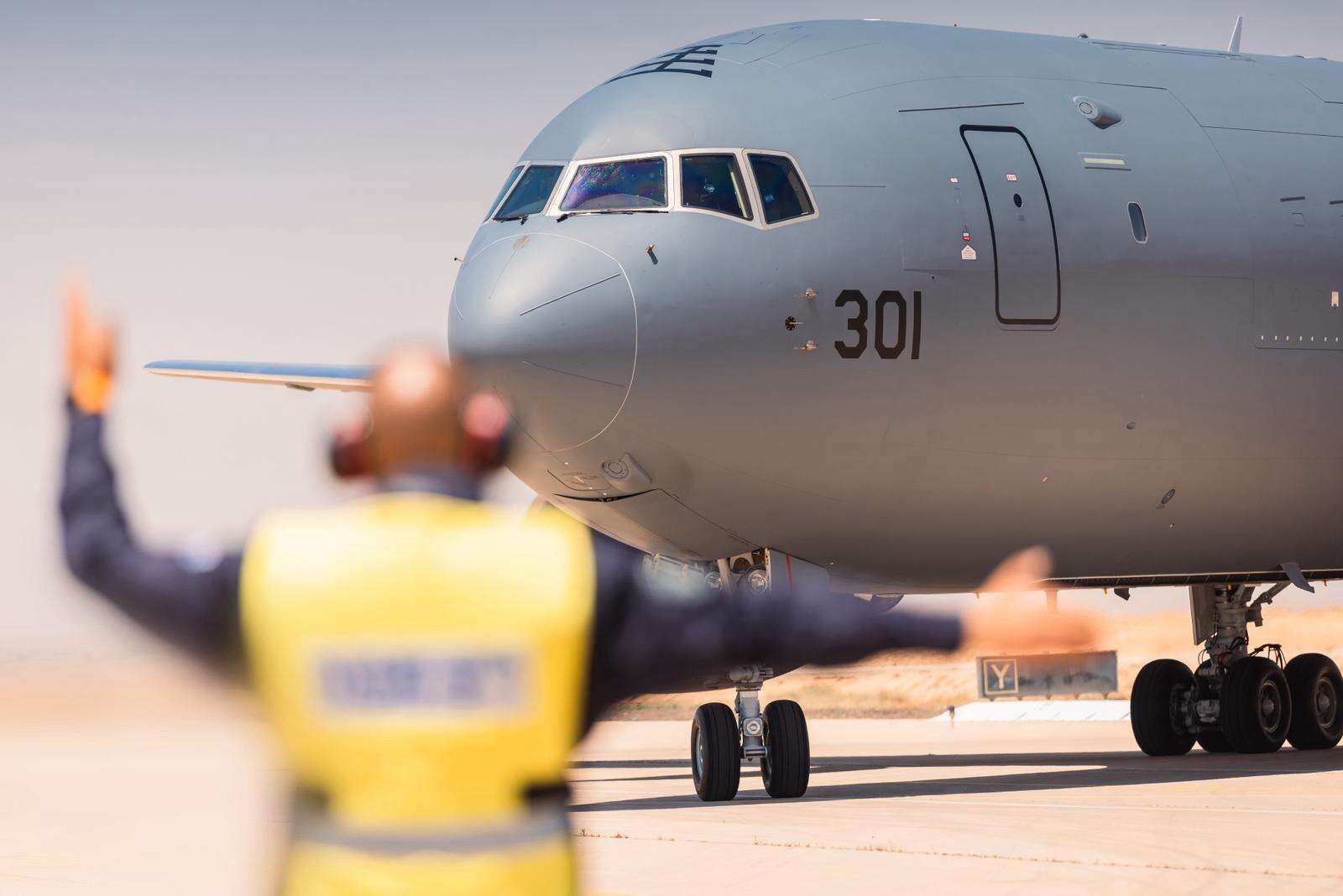
The nightmare scenario does not necessarily involve an enemy flag flying over Nevatim Air Force Base or its "capture" in the conventional sense. Rather, it is a situation in which, during wartime, a major air base becomes inaccessible or operationally constrained, aircraft are damaged on the ground, takeoffs are halted, and security forces are forced to contend simultaneously with blocked roads, threats along the perimeter and an attack from outside Israel. Seconds before aircraft are due to launch strikes in Gaza, Lebanon or Iran, even a temporary loss of air capability could have strategic consequences far beyond the local incident itself.
A dangerous minority
Precisely because of the severity of the warning, the document stresses that the threat is not "Bedouin society." The Southern District police commander has estimated that more than 75% of the Bedouin population is law-abiding and part of Israeli society. On Oct. 7, 2023, Bedouins from the Negev were murdered and kidnapped, and Bedouin soldiers were killed in battle.
The problem, the document's authors write, is a dangerous minority operating in an area where state authority is weak. Failing to distinguish between that minority and the law-abiding majority is itself a policy failure, they argue. That is also why the Rifman plan calls for a multidimensional program combining law enforcement with the regulation of settlement, stronger authorities in the field of land and housing, education, national service and economic tools.
The document's authors also call for changing the way Israel measures risk: not only by counting how many weapons have been seized, but by asking how many minutes it takes a force to reach the Nevatim perimeter when a road is blocked, how many hours are needed to return a damaged aircraft to operational readiness, and how long it takes to identify someone collecting intelligence on a runway. Only then, they write, will the state be able to say it is treating the region for what it truly is: "The air force's internal front line."
Original Here

|
⭐⭐⭐⭐⭐