America's Rare Earth Challenge Could Get a Quantum Computing Solution
Quantum computing could give the U.S. and its allies a new tool in their effort to reduce reliance on China for critical rare earth elements, with one technology company betting the emerging technology can make extracting and processing limited Western supplies more efficient.
Pasqal is partnering with USA Rare Earth and Riven Systems to explore how quantum computing, artificial intelligence and rapid chemical testing can improve the separation and processing of rare earth elements.
Pasqal CEO Wasiq Bokhari told FOX Business that the goal is essentially to get more usable rare earth material out of the resources already available outside China.
China, Bokhari explained, has significant control over global rare-earth supply and processing, while the U.S. and its allies are seeking to develop alternative supply chains for materials used in magnets, electronics, defense systems and advanced manufacturing.
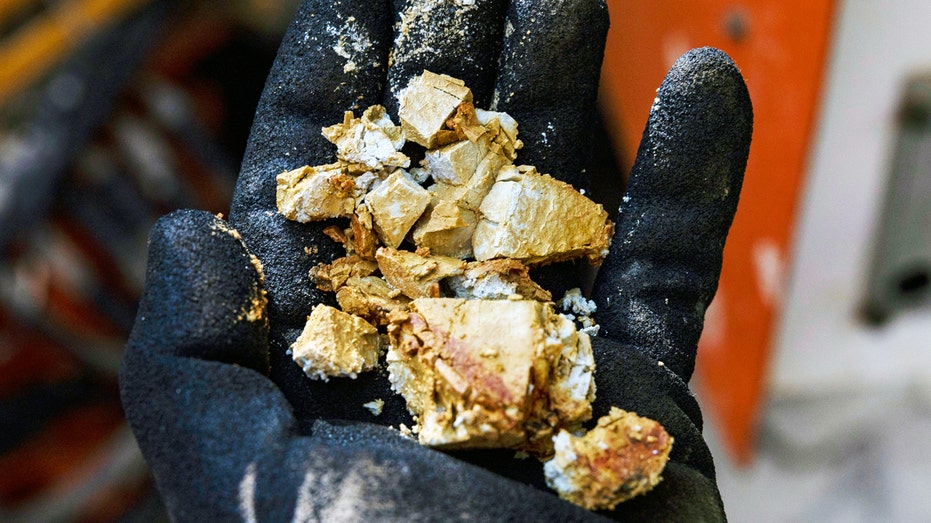
"When we have smaller reserves, then it becomes even more important to be more efficient at finding that element," he said.
Because rare earth elements generally aren't sitting underground by themselves, and are mixed with other minerals, chemically separating them can be a complicated process.
Bokhari said quantum computing can model the molecules and compounds containing rare earths at a deeper level, potentially helping researchers identify properties that can be exploited to separate the valuable material more efficiently.
"What we can do is we can create models of the molecules or the compounds that these rare earth elements occur in... be able to identify their specific properties that we can exploit to then separate them more effectively from other things that are not so rare," he said.

Pasqal is partnering with USA Rare Earth, which brings rare-earth resources and processing expertise to the project, and Riven Systems, which specializes in rapid chemical experimentation and testing.
Bokhari said the effort highlights how the U.S. and its allies can combine advanced technologies to reduce their dependence on foreign-controlled critical supply chains.
The implications could extend well beyond mines and processing facilities, Bokhari said, because rare earths are used in critical technologies ranging from defense systems to advanced electronics.
"There are these elements, these specific materials, and currently we have to buy them from China. Now suppose if we get into a sensitive situation in which we still need those materials, but now somebody else has control over them," he said.
"They can constrict supply, which means we will not have access to those materials for our defense-related or non-defense-related applications," he continued.
"During the COVID era, we saw what collapse of a supply chain could do globally. This is even more important because these are highly leveraged supply chains and going into very high-value components."
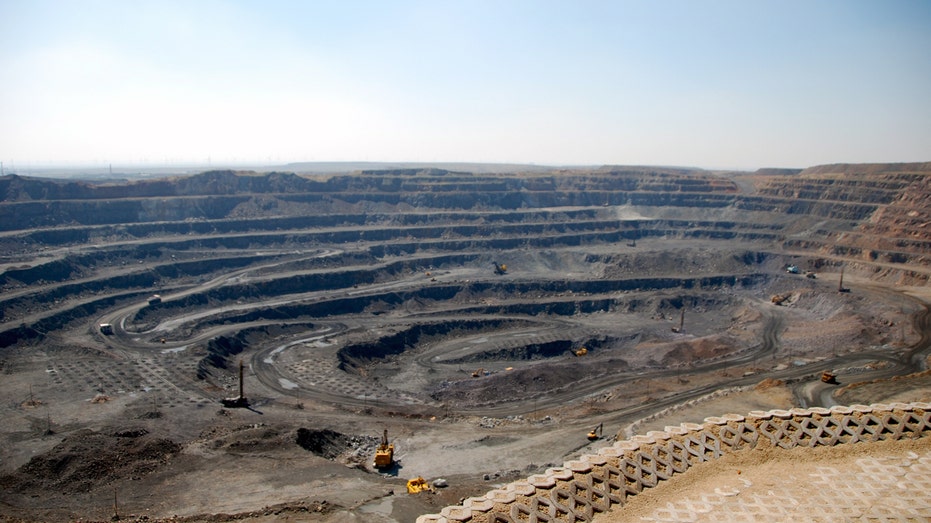
Even relatively small improvements at individual stages of the separation process could compound into significantly greater yields, Bokhari said.
"For every ton of rock that I put in, I want to get certain amounts of rare earth elements. And if I can improve that by a factor of two, factor of three, factor of 10, that matters a lot."
| Ticker | Security | Last | Change | Change % |
|---|---|---|---|---|
| PSQL | PASQAL HOLDING SA | 6.99 | -0.35 | -4.77% |
|
|
||||
Bokhari compared quantum computing today to artificial intelligence (AI) before ChatGPT and other generative AI tools pushed the technology into mainstream consciousness.
"It was working under the radar for the longest time," he explained. "And then suddenly, there's this aha moment, 'Oh, this has something that I can relate to.'"
"I would say as a comparison, quantum computing is only a few years behind," he added. "I think we will see in terms of the kind of impact we can generate from quantum computing, it is the same size of impact that you will see from Gen AI. We're just a few years behind."
Bokhari pushed back on the perception that practical quantum computing remains the stuff of science fiction.
"Please don't think of quantum computing as something that might be in the future. For Pasqal, it is here today," Bokhari said. "In the end, it's solving real business problems today."

|
⭐⭐⭐⭐⭐