Legal Specialists Preview Upcoming SCOTUS Cases On ‘Assault Weapons’ Bans
 By Shawn Fleetwood
The U.S. Supreme Court is gearing up to weigh another big Second Amendment issue in its upcoming term — a matter legal specialists say will greatly affect Americans’ constitutional rights.
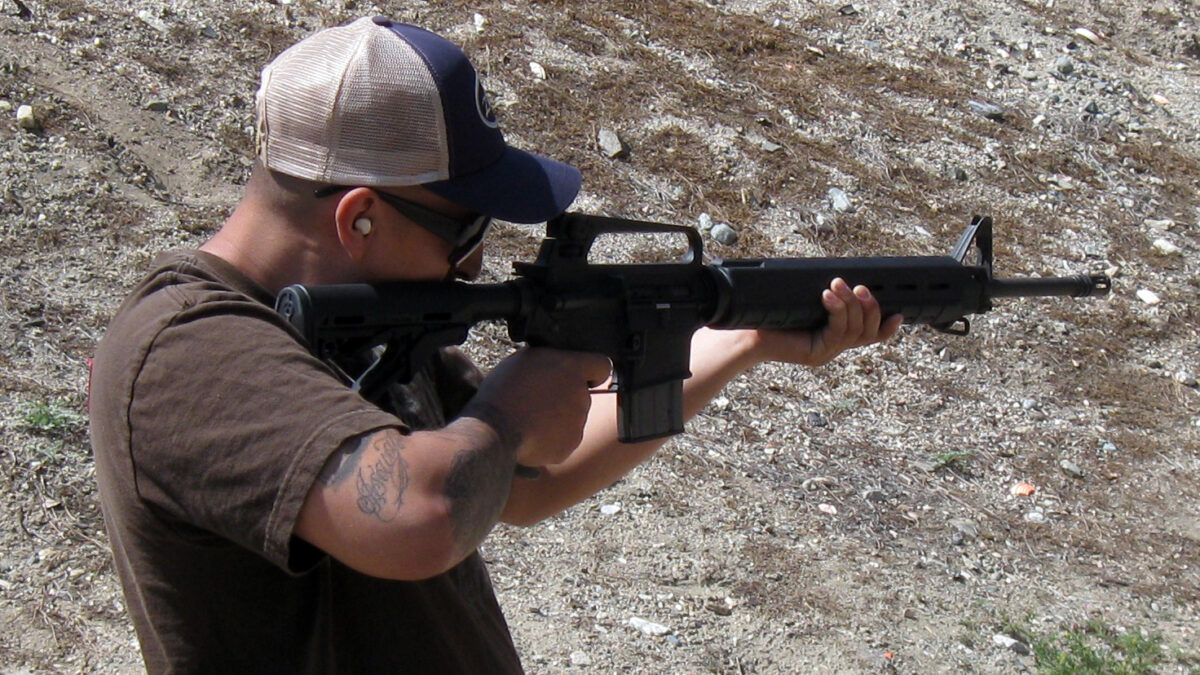
During a Tuesday Federalist Society forum, Notre Dame Law School Professor Haley Proctor and American Suppressor Association General Counsel Michael Williams offered viewers a sneak preview into what’s at stake in Viramontes v. Cook County and Grant v. Higgins. The pair of consolidated cases — which deal with the legality of laws banning AR-15s and similar semiautomatic firearms — will be heard by the high court in its October 2026 term.
The two panelists began by laying the foundation of the Supreme Court’s existing Second Amendment jurisprudence, which included a discussion of its 2022 NYSRPA v. Bruen decision. In Bruen, the majority (6-3) recognized that Americans have a constitutional right to carry firearms outside the home for purposes of self-defense.
The Bruen ruling established a two-step test lower courts are to use when assessing restrictions on firearm possession. The majority said courts must first assess whether the regulated conduct is covered by the Second Amendment’s plain text, and if so, determine if that regulation is consistent with the nation’s “historical tradition of firearm regulation.”
Turning to Viramontes and Grant, Williams observed how the 2nd and 7th Courts of Appeals effectively failed to properly adopt Bruen‘s two-step framework when considering the challenges to the respective laws.
In Viramontes, Williams noted that the 7th Circuit “essentially stops the argument at step one” by analogizing AR-15s to “automatic weapons” like M-16s, which it found are “presumptively not covered by the Second Amendment” under existing SCOTUS precedent. Meanwhile, in Grant, he said that the 2nd Circuit focused more on the second step by accepting Connecticut’s “historical analogues” regarding bans on “certain types of knives” and “machine guns,” and started “to slip closer and closer” to a framework rejected by the Supreme Court in Bruen.
The attorneys also considered the possibility that the Supreme Court may address the lawfulness of restrictions on gun-magazine size in its decision. The sole question agreed to by the justices is whether the Second and 14th Amendments “guarantee the right to possess AR-15 platform and similar semiautomatic rifles.”
Williams opined that “it’s entirely possible you could see these connected in this decision” because “it’s really kind of hard to separate the magazine out from the firearm to the extent that an AR-15 comes with a standard magazine; it’s generally a 30-round magazine.” He furthermore noted these guns’ wide use among the American public.
Proctor expressed uncertainty on whether the high court will handle the magazine issue in Viramontes and Grant, “especially now that there is a circuit [court] split” on the question. She noted there’s always a chance, however.
“One possibility is that they decide Viramontes and send it back to the lower courts to try again with the standard capacity magazine bans,” Proctor said. “What … separates these out is the question of the definition of arms. … [Wolford v. Lopez] shows pretty well that the [Bruen] step-one questions are fairly well-settled. But that is still one area in the magazine cases where lower courts are trying to crack open the step-one analysis. And we see that in the back-and-forth in the 9th Circuit’s decision on large-capacity magazines in the Duncan case.”
“So, hopefully we’ll get some sort of clarification in Viramontes even if the court doesn’t take up the magazine issue on how the arms analysis is meant to proceed,” she added.
In Wolford, the Supreme Court ruled 6-3 that Hawaii’s “vampire rule” restricting concealed-carry holders’ ability to carry on private property open to the public to be unconstitutional. The majority held that the state’s gun control “regime” — which was adopted to seemingly sidestep Bruen — “hobble[d] what the Second Amendment protects: the right of Americans to carry arms for self-defense as they go about their daily lives.”
While signaling the Supreme Court would likely deem the AR-15 restrictions in Viramontes and Grant to be unlawful, Proctor and Williams indicated they wouldn’t be surprised if states with these laws effectively try to circumvent a positive ruling. Williams compared such behavior to the “mass resistance” among Southern states to the high court’s Brown v. Board of Education (1954) decision nuking state-enforced segregation.
“There’s a Supreme Court case that comes out; a certain number of states do not like that outcome; and they’re doing everything in their power to get out from under it, with a little bit of help from some lower courts who haven’t quite wrapped their minds around this test and this issue yet. … But it would be frankly shocking to me if there were not attempts by these states after … a likely, hopeful victory here for AR-15s to get around by just making it difficult,” Williams said.
Towards the end of the panel, the two participants also flagged several gun-related issues that are likely to come down the Supreme Court’s pipeline in the coming years. Proctor highlighted legal battles over bans on firearm possession for 18 to 20-year-olds and felons, while Williams pointed to existing restrictions on suppressors and remaining commerce clause questions involving gun regulation.
A date for oral arguments in Viramontes and Grant has not been announced.
 |
⭐⭐⭐⭐⭐