Judge rules 1A protects child porn if AI used to create it
 By Hayden Cunningham
A federal appeals court has ruled that the First Amendment protects an individual’s ability to possess AI-generated images depicting child sexual abuse material when the images do not depict a real person.
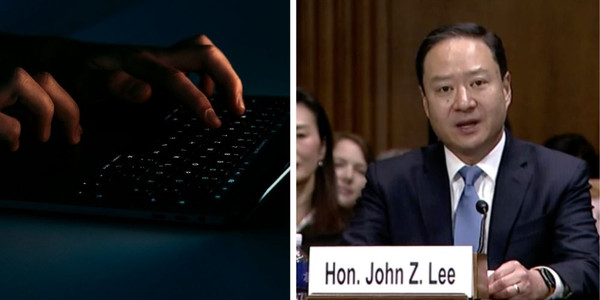
In a ruling from the 7th US Circuit Court of Appeals, Judge John Lee called on the Supreme Court to revisit the issue, as the existing legal precedent was established before advances in AI made it possible to create highly realistic images. Lee wrote, “Given the relentless advancement in artificial intelligence models, we have some concerns about the lines these cases draw, but we are not free to redraw them ourselves.”
Lee cited Supreme Court decisions from 1969 and 2002, including one ruling that individuals have a right to possess obscene material in their own homes and another holding that “virtual” child sexual abuse material that does not depict a real child is not considered child pornography.
The recent case stems from charges brought by the Department of Justice in 2024 against Wisconsin man Steven Anderegg. Anderegg was accused of using an AI image generator to create sexually explicit images depicting children.
Federal prosecutors charged Anderegg with violating federal obscenity laws for the production, possession, and distribution of content that depicted minors in sexually explicit conduct. He challenged the possession and production charges, arguing it was First Amendment-protected activity. A judge last year agreed to dismiss the possession charge, which resulted in federal prosecutors appealing.
Anderegg is still facing charges for producing and distributing such material.
The ruling comes amid a broader debate over AI’s growing ability to generate highly realistic images, including images based on the likenesses of real people. The Supreme Court has previously addressed the issue of “morphing,” in which images of real people are digitally altered to depict them in sexual situations. Such materials are an exception to the protections of earlier cases and may be treated as child sexual abuse material.
Eric Goldman, a law professor at Santa Clara University School of Law, explained to The Washington Post that the decision is a “reminder to the world that virtual CSAM may be different than actual CSAM.”
“It might be regulated differently or protected by the Constitution differently,” he said.
Original Here
 |
Join the Conversation!
⭐⭐⭐⭐⭐
⭐⭐⭐⭐⭐
We have a wonderful, active, and engaged community. Come join us in the comments section below! You'll need a Hyvor account (100% free) if you don't already have one. ⭐⭐⭐⭐⭐