Judge Again Interferes With Trump's Election Security Order — SCOTUS May Have to End This
 By Kyle Becker
It was rarely the case in the past that the broader American public knew the names of judges beneath the Supreme Court level. The second Trump term changed all of that.
Now, there are district court judges whose very names elicit eye rolls from millions of political observers.
Jeb Boasberg. Tanya Chutkan. Juan Merchan.
We can add another to that list: Indira Talwani.
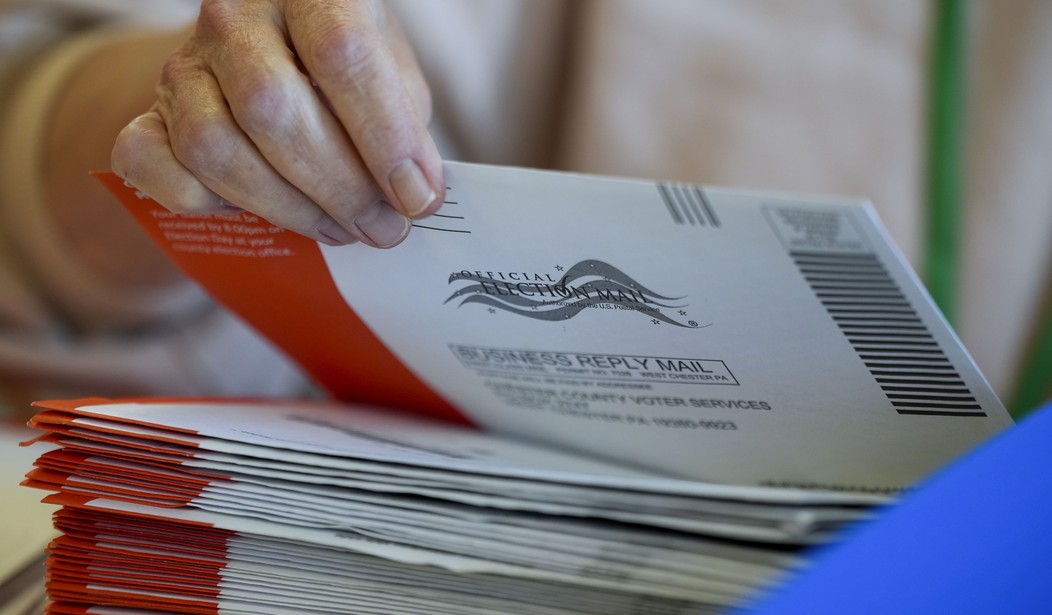
That is because not just once, but twice she has intervened to block the Trump administration from enforcing an executive order to track mail-in ballots.
The President of the United States, undoubtedly, has authority over the U.S. Postal Service. And equally beyond dispute, he has the authority to enforce U.S. statute, such as 18 U.S.C. § 611.
It reads as follows:
It shall be unlawful for any alien to vote in any election held solely or in part for the purpose of electing a candidate for the office of President, Vice President, Presidential elector, Member of the Senate, Member of the House of Representatives, Delegate from the District of Columbia, or Resident Commissioner...
It appears the U.S. Constitution and the law are a problem for Judge Indira Talwani. The Boston judge dealt another blow to President Donald Trump’s executive order aimed at reshaping how federal elections are supervised.
Talwani had already blocked key provisions of the March order, which sought, among other changes, to establish a federal voter list and give the U.S. Postal Service a more direct role in election supervision affecting mail-in voting.
On June 25, Talwani sided with Democratic state attorneys general and granted summary judgment against core portions of the order. SCOTUS Wire broke this legal development down:
Judge Indira Talwani has issued a new injunction blocking USPS from implementing President Trump's executive order on mail-ballot rules for the 2026 midterms. The Supreme Court is currently weighing two requests to lift her earlier injunction against the same executive order.
Talwani previously blocked key parts of the order in a case brought by 23 states and D.C., but that injunction protects only those jurisdictions. The First Circuit declined to stay it, and two requests to lift it are now pending at the Supreme Court. Separately, voting-rights groups, including the League of Women Voters, sought their own injunction against the USPS provisions. Talwani initially denied that request because another court had already imposed a nationwide injunction. After the D.C. Circuit stayed that other nationwide injunction, the groups renewed their request. Talwani has now granted it, blocking USPS from implementing the order's mail-ballot rules for the November 2026 election.
Round and round we go. Here is the nefarious part: The way that Judge Talwani issued the ruling presents another hurdle, beyond the initial ruling.
Even if the Supreme Court ultimately lifts the earlier injunction, the administration would still have to overcome the latest ruling before those provisions could take effect. As SCOTUS Wire further notes:
This new injunction is significant because it is independent of the order currently before the Supreme Court. Even if the justices lift Talwani's earlier injunction, this order would separately block USPS from implementing the mail-ballot provisions for the midterms.
Talwani also rejected the administration's argument that the challenge must await a final USPS rule. She says the proposed rule, steps toward finalization and the fast-approaching election make the dispute ripe now.
On the merits, Talwani again concluded the USPS provisions are likely unconstitutional. She wrote that the executive branch "has no authority to regulate elections," reasoning that the Elections Clause gives that authority to states and Congress.
This was specifically designed to stymie the Trump administration's attempt to provide election security for mail-in ballots before the November elections.
It comes in the aftermath of suspect California elections that saw mail-in ballots dumped into the races after the official "Election Day."
In the Los Angeles mayor's race, DSA-backed Nithya Raman was somehow able to garner enough mail-in votes to edge out Spencer Pratt. Now, the run-off election will be between two socialist candidates.
The Democratic Party undoubtedly wants to repeat that "success" at the federal level in the November elections. Unless the Supreme Court intervenes fast, that may very well be the Dems' "secret formula."
 |
⭐⭐⭐⭐⭐