Iran War Causes Massive Disruptions in Jordan, Kuwait, Saudi Arabia
 By JOHN HAYWARD
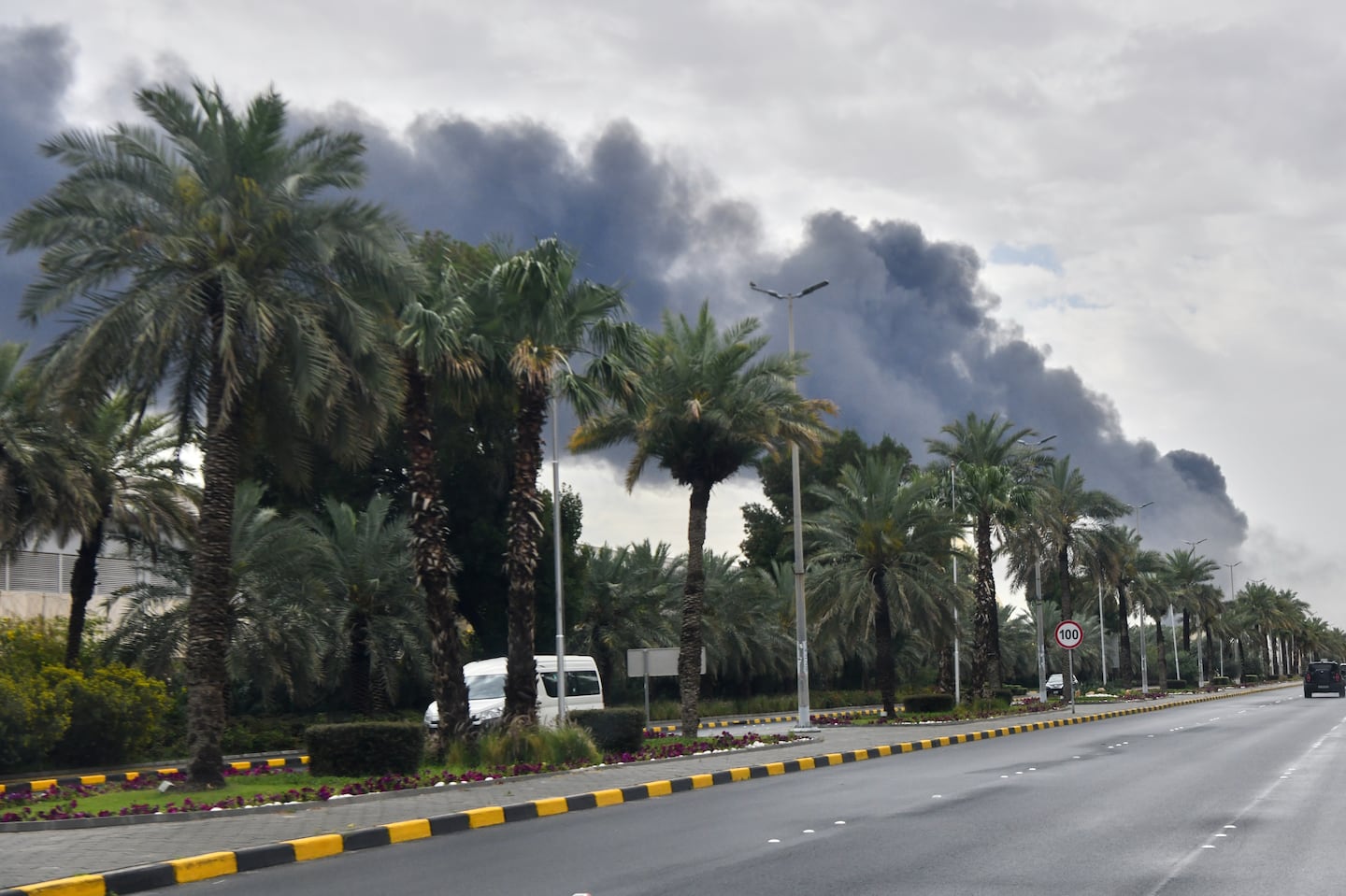
Iran’s attacks on neighboring countries are causing massive disruptions of commerce and travel in Jordan, Kuwait, and Saudi Arabia, from reduced oil exports to canceled airline flights, even though most of Iran’s missiles and drones have been intercepted.
Iran’s terrorist Islamic Revolutionary Guard Corps (IRGC) on Tuesday continued to issue grandiose proclamations of devastating strikes that supposedly wiped out American radar installations, drone hangars, and Patriot missile systems in Bahrain and Kuwait, paving the way for “future large-scale air and missile operations” by Iranian forces.
“The major operation of the warriors of Islam to punish the child-killing U.S. army for disrupting the security of the Strait of Hormuz and attacking parts of our beloved homeland began hours ago,” raved one of the IRGC statements.
“With this radar clearance, the enemy must prepare for more decisive and crushing waves of drone and missile attacks,” the statement threatened.
Contrary to Iran’s fictions about precision strikes against American military bases, officials in Jordan, Kuwait, and Saudi Arabia said Iran is targeting civilian infrastructure, including power and water desalination plants in Kuwait.
The Kuwaiti energy ministry on Tuesday urged civilians to ration power usage after the second Iranian attack on water, electrical, and oil infrastructure in two days. Such rationing will be difficult due to the extreme heat and arid climate prevalent across the country.
The Kuwaiti Foreign Ministry accused Iran of waging a “systematic and aggressive approach aimed at civilian targets.”
In Jordan, air-raid sirens sounded across the capital city of Amman on Monday night. The Jordanian military said Iran fired four missiles at their country. Three were intercepted, while the fourth crashed into an “empty area.”
Jordanian airports reported at least a dozen flight cancellations due to Iran’s attacks. Kuwait and Bahrain have also canceled flights and temporarily closed their airports, although both countries said their airports had fully reopened on Monday.
Ship tracking data on Tuesday showed a dramatic decrease in oil loadings from Saudi Arabia, which used pipelines to shift much of its oil flow from the Persian Gulf to the Red Sea to avoid Iran’s attacks on shipping in the Strait of Hormuz — only for Iran’s terrorist proxy in Yemen, the Houthis, to threaten attacks on Saudi tankers in the Red Sea.
Ship tracking service Kpler said crude oil loadings in Saudi ports for the route through the Red Sea and Bab el-Mandeb Strait have declined by 36 percent over the past two weeks.
The Houthis on Monday declared a “maritime ban” on Saudi shipping, which they presumably intend to enforce with terrorist attacks on oil tankers, the same way they ostensibly “banned” Israel from the Red Sea during the Gaza War in 2023-2024. The result was that almost half of the traffic that normally uses the route to the Suez Canal wound up diverting around Africa, and the normal traffic pattern has never completely recovered.
“If the Houthis succeed in disrupting shipping through Bab Al-Mandeb or around Saudi Red Sea ports, they would place Riyadh’s alternative export route at risk. In effect, they would threaten both of the Gulf’s main oil export corridors,” warned Chatham House associate fellow Neil Quilliam.
The Houthis were notoriously careless about targeting “Israeli” ships during the last Red Sea crisis, so they might be expected to terrorize oil and cargo ships that are not strictly linked to Saudi Arabia. About 12 percent of global seaborne commerce flows through the Bab el-Mandeb Strait, including a quarter of the world’s container shipping.
Quilliam said that although Saudi Arabia would prefer to disentangle itself from the Yemeni civil war, after intervening against the Houthis from 2015-2022 without much to show for it, Riyadh will feel “pressure to respond militarily, either directly or through Yemeni government forces” if the Houthis begin targeting Saudi ships.
Original Here

|
⭐⭐⭐⭐⭐