As Trump Hits the Brakes, Hezbollah Pushes the Limits
 By Yoav
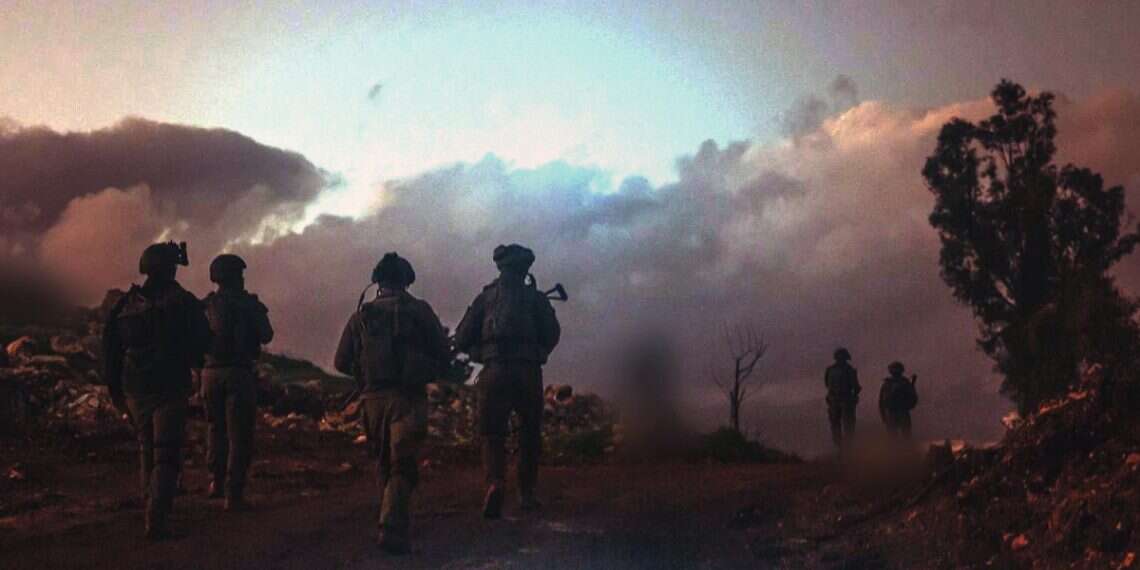
Israel and Hezbollah escalated the war over the weekend, expanding the combat zone north of the Litani River on the Lebanese side and south of the confrontation line on the Israeli side.
Israel has in fact been operating north of the Litani for some time, but Prime Minister Benjamin Netanyahu gave that a deliberate and public expression during a visit Friday to the headquarters of the 36th Division, which is maneuvering in Lebanon. Netanyahu, who is facing severe public criticism because he has complied with US President Donald Trump's demand and has not allowed the Israel Defense Forces full freedom of action in Lebanon, said, "Our forces crossed the Litani."
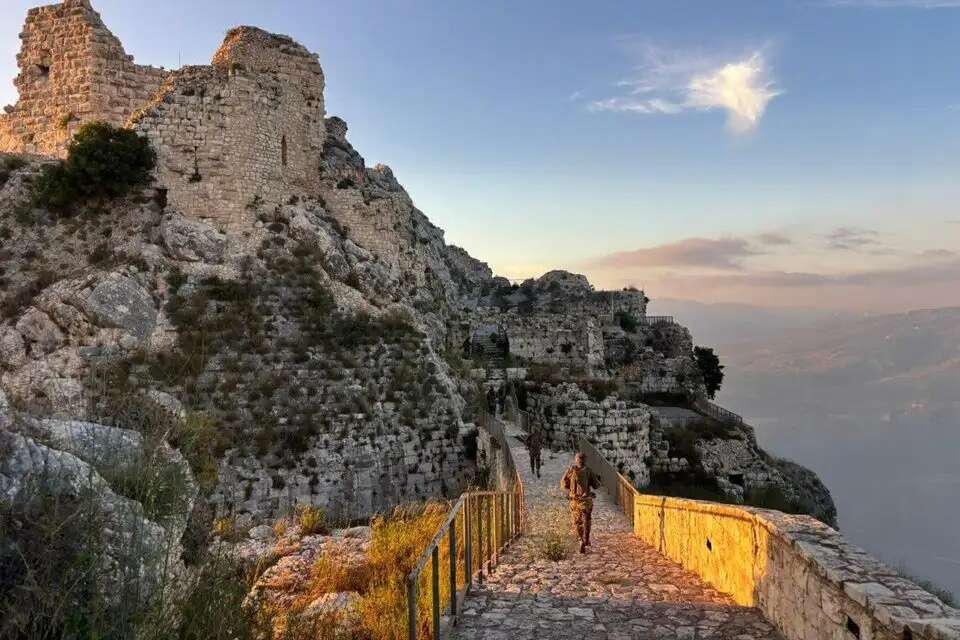
In doing so, Netanyahu may have implicitly confirmed what has been reported in Lebanon in recent days about intense IDF activity in the Beaufort sector, which is considered a strategic Hezbollah stronghold.
Exchanges of blows
Alongside the visit, another meeting was held between officers from the IDF and the Lebanese army, as well as from the US military and American officials. The meeting produced no breakthrough, but immediately afterward Hezbollah launched a broad attack not only with drones but also with rockets, most of which were intercepted.
One rocket hit Kiryat Shmona and caused extensive damage. It was the stormiest Shabbat since the ceasefire was declared about a month and a half ago, and included rocket launches toward Safed, Nahariya and Carmiel.
The assessment in Israel is that this is not a momentary escalation, but a trend that will continue in the coming days and perhaps beyond. Senior officials claim this indicates the distress the organization is in, but it is more likely that Hezbollah is operating according to its familiar equations. From its perspective, if Israel crossed the "permitted" lines, then it is doing the same.
By expanding the range of its fire, Hezbollah is also trying to use the Israeli home front to pressure decision-makers, and presumably to signal to the Lebanese government that the future of relations with Israel is not solely within its authority.

The expansion of IDF activity is indeed causing Hezbollah some damage, but it is not changing the overall picture. Even public-relations achievements, which may be presented in the coming days, will not change the harsh reality in the north.
The US-Iranian axis and the 60-day trap
As on his previous visits, Netanyahu once again skipped a meeting with heads of local authorities and residents in the area. It is doubtful whether he can maintain that evasiveness for long, given the expansion of rocket ranges and the entry of tens, and perhaps hundreds, of thousands more Israelis into the combat zone.
And all this is happening while, at least officially, there is still a ceasefire in Lebanon. It is unclear what would have to happen for Trump to remove the restraints on IDF activity, or for Israel to defy him.

At the moment, the chances of that appear slim, given the prolongation of the talks between the United States and Iran, under whose auspices the ceasefire in Lebanon was declared. Tehran wants to include Hezbollah and Lebanon in the understandings that are reached, which could allow the terrorist organization to recover and reestablish itself in Lebanon. Israel hopes Trump will not agree to the request, although his recent conduct on Lebanon does not bode well.
For now, Trump appears inclined to reach a temporary understanding with Iran that would extend the ceasefire by 60 days, until after the World Cup. During that period, the parties are supposed to discuss all the disputed issues, with the aim of reaching a permanent deal at the end of it.
Bad news for residents of northern Israel
Blessed is the believer who thinks that is possible, especially on the nuclear issue. The talks over the nuclear agreement signed in the past lasted about a year, and Iran now appears even more brazen and demanding. Various quotes published in recent days from senior regime officials indicate extreme self-confidence in Tehran, given their understanding that the United States is not interested in a resumption of fighting.
For the north, this is bad news. Extending the ceasefire by 60 days means more drones, more UAVs, more rockets. With summer approaching, many residents of the area, especially families, may choose to leave, and it is unclear how many of them would return after having already left and returned once since Oct. 7.
Add to that the loss of the tourism season and the damage to agriculture, and this could be a devastating blow to the region, one that requires an emergency response from the government.
Government ministers are less preoccupied with these matters. Many of them did not even bother to express condolences over the deaths of IDF soldiers last week, but rushed to publish statements of support for Jonatan Urich, the prime minister's adviser, who is to be indicted on suspicion of intending to harm state security.
There is no surprise when it comes to government ministers: They are busy with primaries and winking at the base. The fact that Shin Bet security agency chief David Zini is allowing someone who worked for pay on behalf of Qatar and will now be charged with serious security offenses to remain at the most sensitive center of decision-making in the country is a true eclipse of reason.
Original Here

|
⭐⭐⭐⭐⭐