Lebanon Agreement Rattles Iran, Hezbollah, Creating New Strategic Dilemma
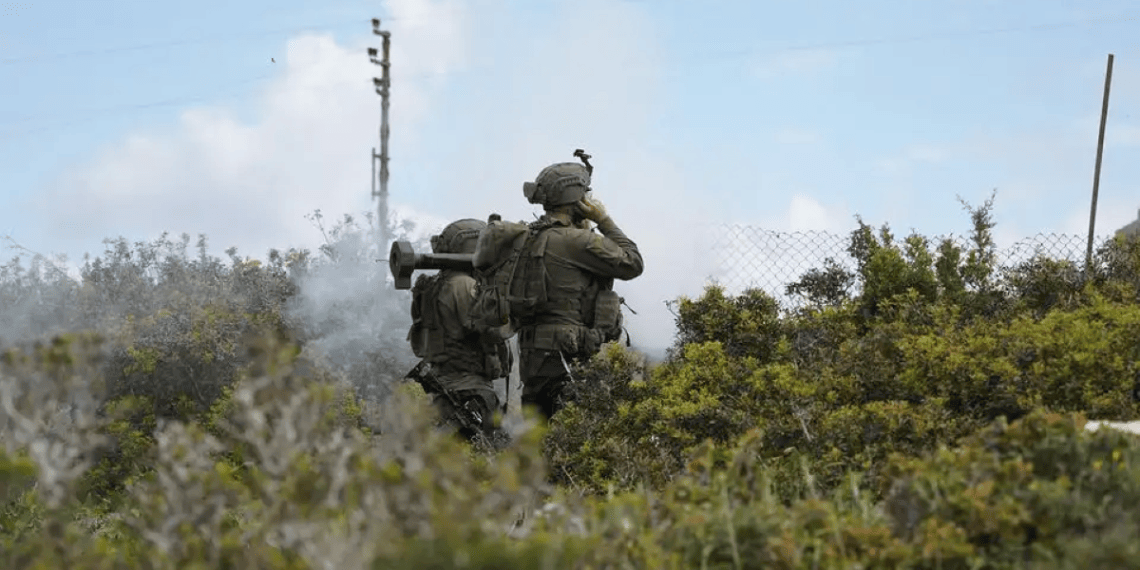 Israel will eventually have to test the validity of US assurances against Washington's commitments to Tehran
The flood of incessant statements from Tehran and Hezbollah strongholds against the framework agreement signed over the weekend reflects the deep frustration and sense of defeat overwhelming them. Only a week after declaring that "missile-based Iranian diplomacy" is what "protects Beirut from Israel," Hezbollah and Iran are forced to recalculate their route.
"The agreement is invalid – we will continue to apply pressure for an Israeli withdrawal," Hezbollah Secretary-General Naim Qassem responded. Echoing his sentiments, Lebanese Parliament Speaker Nabih Berri charged that the agreement is designed to sow division and civil war – a scenario that triggers severe anxiety across all strata of the Lebanese population. Iranian spokespersons focused primarily on denying the validity of the framework agreement, such as Iranian Foreign Minister Abbas Araghchi, who called on the US to "restrain Israel" and emphasized that under the memorandum of understanding signed with Iran, Washington must pressure Israel to halt its attacks and withdraw from Lebanese territory.
Understanding the administration
Developments in the Lebanese arena caught senior Islamic Revolutionary Guard Corps officials in Tehran while they were preoccupied with a series of other burning issues, including the exchange of blows with the US, the Strait of Hormuz issue, developments in Iraq, and the statement by Gulf foreign ministers calling for the inclusion of ballistic missiles, drones, and Iranian support for proxy groups in the emerging agreement with Tehran.
The leadership in Tehran presumably seeks to understand the actions of the US administration, questioning whether this series of events marks the beginning of a shift in direction toward them. They wonder if the commitment to Iran to limit Israeli activity in Lebanon was part of a "conspiracy" leading up to the signing of an Israeli-Lebanese agreement. Assuming the administration remains concerned about the midterm elections, they are likely weighing how much further it can be pressured for concessions in Lebanon and on other issues.
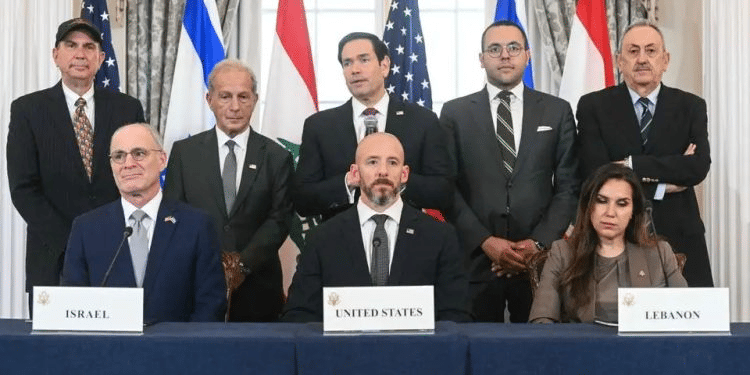
The price Iran and Hezbollah are required to pay due to the agreement between Israel and Lebanon concerns demands to end Iranian involvement in Lebanese affairs and to disarm Hezbollah. The agreement directly links the withdrawal of the IDF from Lebanon to the disarmament of Hezbollah, thereby refuting the claim that the IDF presence on Lebanese soil is illegitimate. While these are critical issues for Iran and Hezbollah, they do not necessitate immediate action on the ground as long as the IDF and the Lebanese Armed Forces do not alter their operational patterns.
Conversely, if the IDF views itself as liberated from the restrictions the US imposed following the "memorandum of understanding" and operates differently than it has over the past two weeks, it will serve as evidence of the practical dissolution – and not just in declarations – of the link Iran attempted to forge between the two arenas. Such a development would impale the Iranian regime on the horns of a dilemma between wanting to maintain its involvement in Lebanon and the price it might be forced to pay, not only in the Lebanese arena.
Sooner or later, Israel will be required to test the validity of the commitments granted to it in the "framework agreement" compared to the commitments the US gave to Iran in the "memorandum of understanding."
Neutralizing, or at the very least significantly reducing, Iranian influence in this arena is critical to Israeli security, though Iran views its own involvement in the same arena in a similar light. The missile fire from Iran toward Israel following IDF strikes in the Dahiya has pushed the confrontation into a new phase. On the path to neutralizing Iranian influence, Israel will also need to shatter this equation. While this may not be required immediately, it is prudent to plan the move right now.
Recent speeches by Sheikh Naim Qassem offer a closer look at the organization's current doctrine, in which he outlines five foundational pillars.
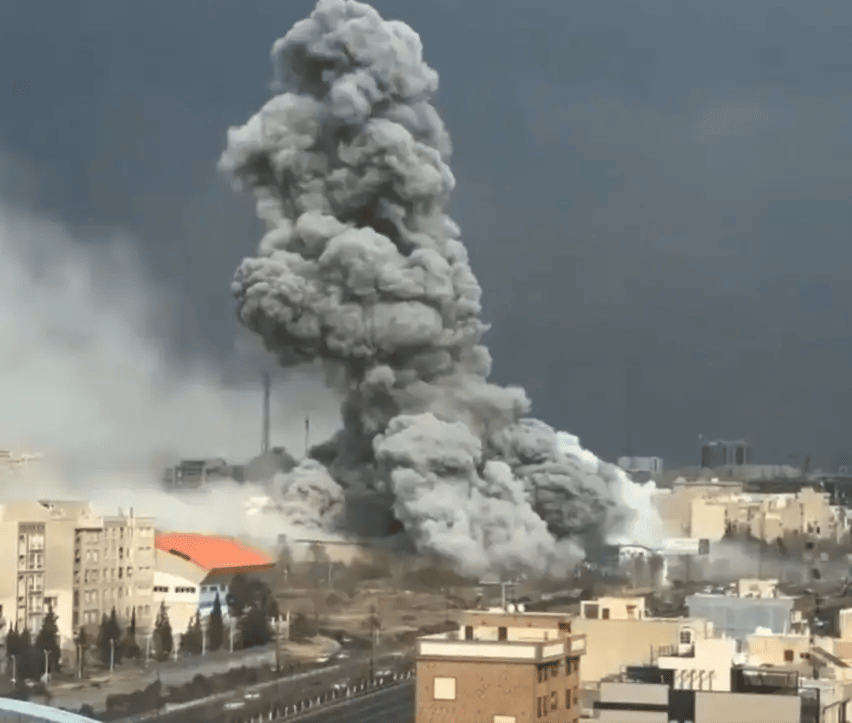
The first is the understanding that Hezbollah faces an existential threat due to the shift in the regional balance of power and in light of the "American-Israeli project to erase the Axis of Resistance." Defining this as an existential threat mandates utilizing all resources and operating by any means necessary to remove it.
The second emphasis is that there is no turning back to the reality imposed on Hezbollah before the start of the current chapter of fighting on March 2. The organization will not accept "any form of occupation" and will not agree to what Israel terms "freedom of action" inside Lebanese territory.
The third is that as long as a threat looms against it, disarming Hezbollah remains "outside the boundaries of legitimate discourse."
The fourth is that the organization adheres to its aspiration for national unity while preserving internal balances.
The fifth is that any diplomatic settlement must guarantee Lebanese sovereignty, based on an equation of "security for security" and the deployment of the Lebanese Armed Forces south of the Litani River.
The framework agreement between Israel and Lebanon undermines some of these pillars and paves the way for an open confrontation between the terror organization and the Lebanese government. Whether the government will be capable of this remains uncertain, as structural reforms within the administration and the Lebanese Armed Forces are essential for this purpose, and their implementation could take years.
Even before discussing its disarmament, Israel must continue to prevent the rehabilitation of Hezbollah, the rebuilding of its arrays, and its reinforcement processes. At least for the foreseeable future, a military presence and operational freedom of security action will remain the key to achieving this.
Original Here

|
⭐⭐⭐⭐⭐