Rep Pramila Jayapal reveals she has been working with foreign countries to bring oil to Cuba in defiance of Trump's embargo
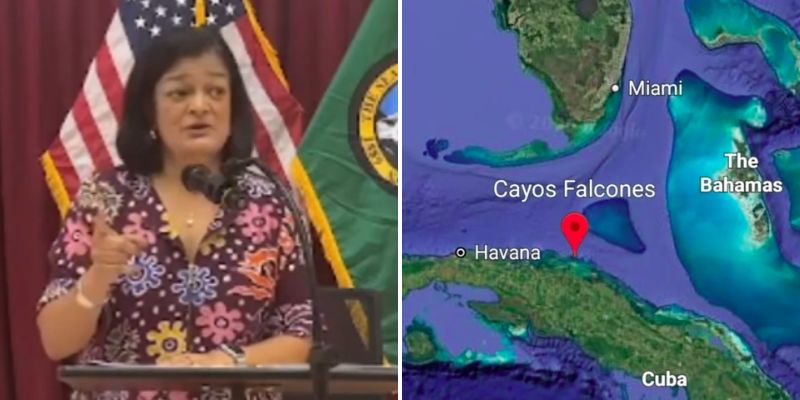 "I was in conversations with the ambassadors from Mexico and some other places, other countries in Latin America, trying to figure out how to get oil there."
 By Katie Daviscourt
US Rep. Pramila Jayapal (D-WA) disclosed that she has been in direct communication with ambassadors from Mexico and other countries to strategize shipments of oil to Cuba, a country under aggressive US sanctions imposed by the Trump administration. The congresswoman made the remarks during a town hall speaking event this week.
The congresswoman equated the sanctions to an "economic bombing of the infrastructure of Cuba," stating her opinion that "it is illegal" and "against international law." As a representative in the US House, her responsibility is to US law, not international law.
US Rep. Pramila Jayapal (D-WA) disclosed that she has been in direct communication with ambassadors from Mexico and other countries to strategize shipments of oil to Cuba, a country under aggressive US sanctions imposed by the Trump administration. The congresswoman made the remarks during a town hall speaking event this week.
"I was in conversations with the ambassadors from Mexico and some other places, other countries in Latin America, trying to figure out how to get oil there," said Jayapal, adding that Russia has pledged to send another tanker. She emphasized the need for a steady supply of oil to the communist nation, despite the federal government's restrictions.Rep. Pramila Jayapal says she has been working with foreign countries to try to get oil to Cuba
— The Post Millennial (@TPostMillennial) May 6, 2026
pic.twitter.com/7haTV0M5NB
The congresswoman equated the sanctions to an "economic bombing of the infrastructure of Cuba," stating her opinion that "it is illegal" and "against international law." As a representative in the US House, her responsibility is to US law, not international law.
In recent remarks, Jayapal said "The climate crisis is the single biggest threat facing humanity, and if we are going to address it at the scale needed to limit global warming to not more than 1.5 degrees Celsius, we are going to have to work together. We are going to need unprecedented levels of global cooperation and collaboration to meet everyone's basic needs, including food, clean water and keeping the communities we call home habitable.
"At the same time, we increasingly rely upon sanctions as a key foreign policy lever. The material impact of sanctions is known to undermine the human rights of civilians who can get cut off from access to basic needs, often the same basic needs that are threatened by the very climate crisis, as we see increasingly more frequent extreme weather events."
"At the same time, we increasingly rely upon sanctions as a key foreign policy lever. The material impact of sanctions is known to undermine the human rights of civilians who can get cut off from access to basic needs, often the same basic needs that are threatened by the very climate crisis, as we see increasingly more frequent extreme weather events."
In January 2026, President Trump signed an executive order imposing tariffs on "goods from countries that sell or otherwise provide oil to Cuba." The order states that the sanctions are to protect "US national security and foreign policy from the Cuban regime's malign actions and policies." The president enhanced the sanctions on May 1, 2026, imposing new penalties on foreign banks and firms doing business with Cuba.
Rep. Jayapal said the sanctions are intended to "ensure that [Cuba's] infrastructure collapses."
In June 2025, President Trump issued a National Security Presidential Memorandum to ensure the "engagement between the United States and Cuba advances the interests of the United States and the Cuban people." During the president's first term, he designated Cuba as a State Sponsor of Terrorism, reversing the Obama administration's easing of restrictions on the communist country.
Jayapal led a congressional delegation to Cuba in early April. She has been one of the harshest critics of the Trump administration's embargo.
Rep. Jayapal said the sanctions are intended to "ensure that [Cuba's] infrastructure collapses."
In June 2025, President Trump issued a National Security Presidential Memorandum to ensure the "engagement between the United States and Cuba advances the interests of the United States and the Cuban people." During the president's first term, he designated Cuba as a State Sponsor of Terrorism, reversing the Obama administration's easing of restrictions on the communist country.
Jayapal led a congressional delegation to Cuba in early April. She has been one of the harshest critics of the Trump administration's embargo.
Original Here
 |
Join the Conversation!
⭐⭐⭐⭐⭐
⭐⭐⭐⭐⭐
We have a wonderful, active, and engaged community. Come join us in the comments section below! You'll need a Hyvor account (100% free) if you don't already have one. ⭐⭐⭐⭐⭐
×
Are you enjoying Tex's Place? Please consider making a contribution. Even $5, $10 or $20 goes a long way to keeping us online, and advertisement free.
You can contribute by CLICKING HERE