The Town that Would Be World Submarine Capital Again
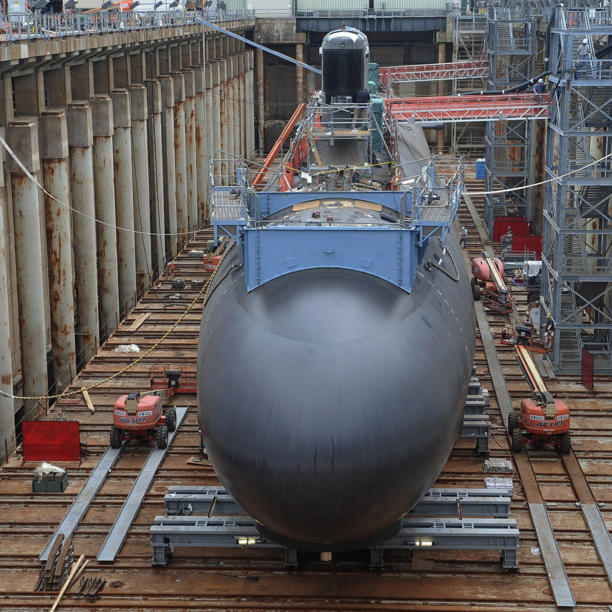 Submarine under construction in 2015 at Elecctic Boat in Groton, Conn. (AP)
By Owen Tucker-Smith
GROTON, Conn.— Thirty-five years ago, the end of the Cold War drained this hardscrabble coastal manufacturing town of its chief purpose: building America’s submarines. Now the Navy needs the shipyard along the Thames River to rev its engines back into high gear.
The military’s orders have left Groton with a high-stakes challenge: how to resurrect a bygone era of military might in a far-flung seaside town short on workers, homes and transit.
“It’s amazing,” said Martha Marx, a state senator, of the potential impact of the company’s hiring push. “Except we don’t have anywhere for these people to live.”
In its race against China’s advances in maritime technology, the Defense Department is focused on upgrading its nuclear-submarine fleet, and it’s the job of Groton-based manufacturer General Dynamics Electric Boat and a slew of local suppliers to keep up. After a string of delays, the Navy recently added $16 billion in funding for Electric Boat to continue work on new submarines, stressing that timely construction is its top priority.
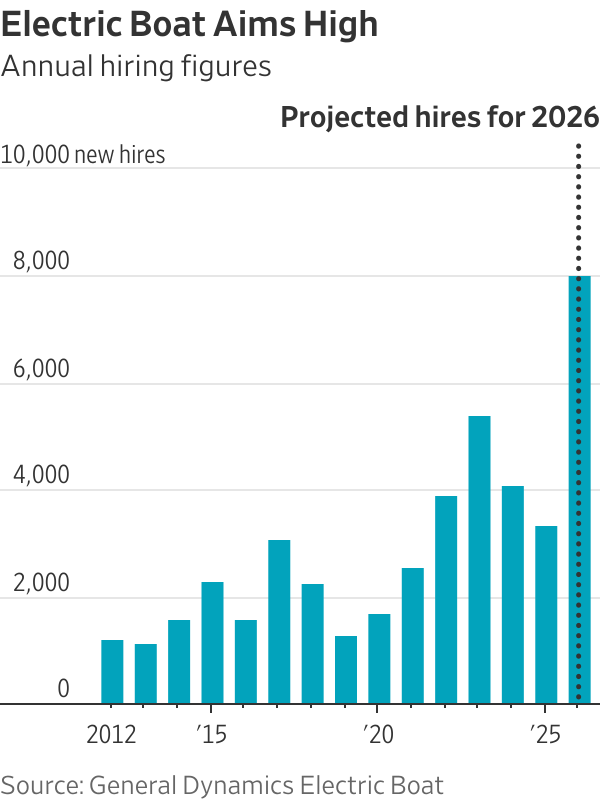
Electric Boat President Mark Rayha needs a workforce to match that demand. He told employees in a February memo that the contractor wanted to hire 8,000 workers by the year’s end in Connecticut and another plant in Quonset Point, R.I.
The company is confident in its ability to find workers, Rayha said in an interview, adding that Electric Boat had received tens of thousands of applications in the past three years. A hiring event one recent weekend, at which the company made spot offers to Electric Boat hopefuls, drew a line around the building.
“The term we’re using around here is ‘wartime footing’: doing all it takes to build submarines quickly,” he said.
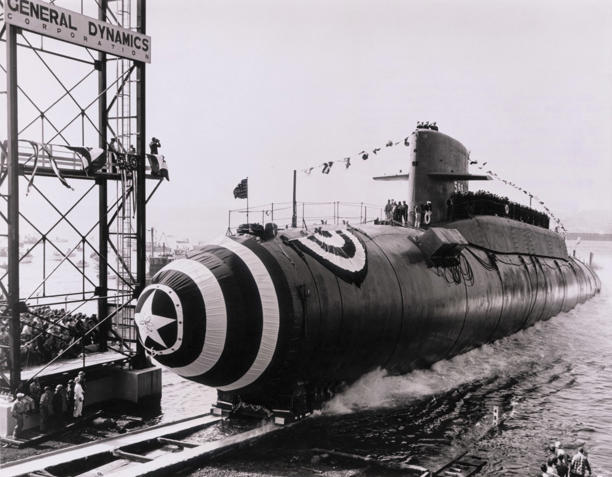
Groton’s fortunes have for generations been tied to the nation’s maritime ambitions. Electric Boat hired thousands of workers during the Cold War. Some, like Peter Baker, are still with the company, and they remember the days when droves of workers would spill out of the shipyard and fill the Gatehouse Tavern, a rustic shack across the street, where prefilled pints of beer lined the bar waiting for them.
Then the Berlin Wall fell, Navy funds dwindled, budget cuts hit and the tavern emptied out. “All we had to do was throw a couple tumbleweeds in there and we would’ve had a ghost town,” Baker said. Two local casinos—Foxwoods and the Mohegan Sun—mass hired, and Connecticut’s manufacturing powerhouse morphed into a services economy.
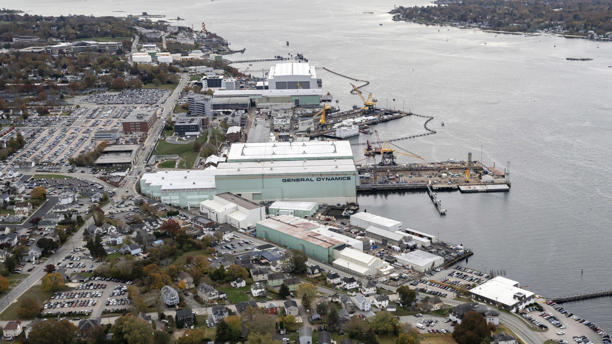
Electric Boat’s head count has steadily climbed over the past decade after the government in 2010 approved plans to build two nuclear-powered submarines a year. Production has ramped up at other facilities, specifically in Virginia and Rhode Island, but Groton has remained the so-called Submarine Capital of the World.
The company fell behind its goals during the pandemic. Now it’s playing catch-up, and the federal government is eagerly waiting. The prospect of 8,000 new jobs in just a year represents a dramatic acceleration of Electric Boat’s expansion goals.
The company’s recruiters are drawing from a shrinking pool. Connecticut’s labor force is smaller than it was just before the pandemic, according to labor-department data, even as workforces in other New England states have grown. When Baker joined Electric Boat in 1983 as a firefighter, the state’s median age was just below 33. Now it’s 41.
A recent Electric Boat recruiting event at the Crystal Mall in Waterford, Conn. A recent Electric Boat recruiting event at the Crystal Mall in Waterford, Conn. © General Dynamics Electric Boat Adding to the challenge is that Electric Boat went years without aggressively hiring, so the company’s staff is mostly a mix of seniors and newcomers, Baker said. The shipyard’s attrition of veteran staff means recruiters have to hire just to keep the company from shrinking, though Rayha said the company’s attrition rate has dropped in recent years.
Groton is also isolated from the state’s major transportation lines and limited by a declining population. Since its heyday in the ‘80s, the area’s demographics have transformed: There are more households but fewer children, so shrinking families and the elderly are increasingly competing for a diminishing stock of small homes. More than 80% of the town’s workers commute from surrounding areas, sometimes spending hours on the road while paying increasingly burdensome gas prices.
Officials in New London County, concerned about the area’s housing and labor shortage, have increased programs that train adults and high-schoolers alike for the trade, while studying how the region can accelerate the construction of new homes.
Now, they need to do all of that even faster.
“If any of those pieces start to fall behind, it impacts our ability to meet our submarine production goals,” said Aundré Bumgardner, a state representative from Groton. “And the U.S. Navy has been very clear about that.”
Connecticut is betting on short-term training courses to fill the jobs, spending millions of dollars on no-cost classes in blueprint reading, equipment usage, math, painting, welding and other tasks. The program has trained most of Electric Boat’s new Connecticut trade hires in the past few years, said Michael Nogelo, chief executive of the Eastern Connecticut Workforce Investment Board. But it hasn’t been able to meet the demand.
“Finding that number of people during a heavy hiring period is a challenge,” Nogelo said. The program has looked to far-off cities like New Haven and Hartford in the hopes of training more workers. But those recruits then need to decide whether to make the cross-state trek to work or relocate; the latter option means staring down bidding wars, pricey homes and high rents.
Area houses “became out of reach for a lot of people, really fast,” said Jeff Davis of Horsley Witten Group, a consulting firm that Groton has hired to help tackle the housing shortage. The firm will soon present the town with its recommendations, which Davis said could include a proposal to allow the division of the town’s outdated, sprawling lots into several “child lots,” that include smaller units.
Just down the street from the shipyard, Groton resident Autumn Gardiner rents an apartment that she’d love to pass off to a new Electric Boat employee after she buys a home. But after more than 10 failed bids of her own—and one heartfelt, pleading letter addressed to a seller—she has sworn off her own search for now.
Stuck-in-place renters like Gardiner mean fewer rental opportunities for new Electric Boat employees like Joseph Pena Reyes, who was hired last summer to paint submarines the size of football fields and participated in the region’s training program.
Growing up in Connecticut, Reyes used to look across the water at Electric Boat’s operation when he was fishing, wondering what went on inside. Now, the 23-year-old gets to climb into the crevices of unpainted submarines. But he still can’t live in Groton. Reyes, who lives in nearby New London, loves his job, but he wonders what will happen to the already squeezed market when the new hires come to town.
“8,000 people… it’s just crazy,” Reyes said. “Finding a place to live is going to be really hard for a lot of people.”
Baker, 42 years Reyes’s senior at the company, hopes there’s enough time for Electric Boat’s senior shipyard workers to train the ballooning crew of novices before they retire. But he knows the town, and its sagging economy, needs them. When he walked into the Gatehouse Tavern by the shipyard just before 5 p.m. on a recent Monday, the place was empty.
Baker sat at the bar with the former owner’s son, Shawn Arsenault, near the tavern’s dusty dart boards and outdated signage (“As of April 1, 2004,” one notice reads, “this establishment will be No Smoking”). The two men wondered aloud what thousands of new submarine builders would mean for Thames Street, once a bustling downtown and now a row of vacant storefronts.
As far as Arsenault’s concerned, the hiring boom can’t come soon enough. “They want these submarines yesterday,” he said. “Bring it on.”
Original Here
|
|
⭐⭐⭐⭐⭐