Ripped off! Universities Sold a Whole Generation on a Lie
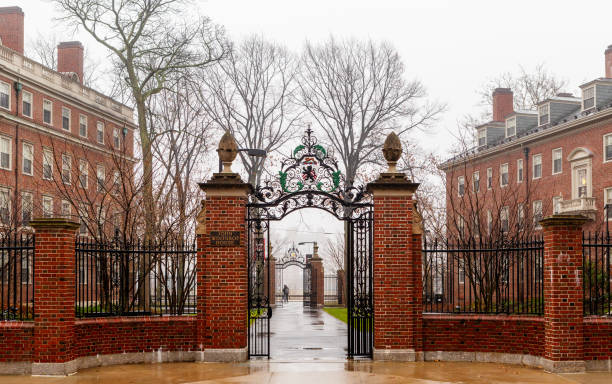 Harvard University
By Joel Kotkin
Some day, Donald Trump may lead America into a golden era of reindustrialisation, or perhaps one last hurrah before China’s domination of materials and manufacturing knocks the US off its number one perch. Yet what if we start to build new factories and ports but no one shows up to work in them?
Trump claims to have dragooned some $12 trillion in new foreign investment, but even he questions whether we have the bodies, and minds, to fill American jobs. He recently defended H-1B visas for migrants with “special” talents (after first questioning them), alarming some of his more nationalist Maga allies.
H-1B visas are typically used by tech firms, but the row over their future illustrates why America is facing a critical shortage of skilled workers across the board. To some extent, both sides of the debate are right.
As the populist Right points out, H1-B visas have a record of abuse – including a notorious case at Disney, which replaced some of its American IT workers with foreign ones and even effectively required the departing US staff to train their replacements. Roughly three-quarters of Silicon Valley’s jobs were in 2018 estimated to be held by non-citizens. Of course, the oligarchs look at these “technocoolies” not so much as a genius input as a way to save money.
But still, as Vivek Ramaswamy has acidly pointed out, foreign workers are needed because of profound failures in the US education system.
Today, US fourth and eighth graders are performing worse not only than students in East Asia, but also those in the likes of Poland and Sweden. Overall, some 40 percent of US public school students fail to meet standards in either maths or English, worse than pre-pandemic. The country was hardly doing spectacularly before then. In maths, the OECD’s 2018 Program for International Student Assessment found that 26 countries outperformed the United States – not only China, but also Russia, Italy, France, Finland, Poland, and Canada.
What if we start building new factories and ports, but no one shows up to work in them?
This lack of achievement at the grade school level is felt not only in the elite professions but even in more mundane careers such as truck drivers, machine-tool operators, and welders who can do basic industrial tasks. By 2030, the US could be short about two million industrial workers; the American Welding Society estimates the shortage of skilled welders exceeds 400,000 nationwide.
Even well-paying jobs of this kind have been hard to fill. Ford chief executive Jim Farley notes that the carmaker has 5,000 open mechanic jobs that pay $120,000 annually that can’t be filled.
America’s inability to produce a new generation that can do these jobs reflects a deeply-ingrained tendency to ignore practical skills in favour of the supposed Valhalla of a four-year liberal arts education. The problem is not just universities. High schools have removed shop classes – where students are taught basic skills like woodwork – thinking them too declassee and demeaning.
Even well-paying blue collar positions remain empty. Ford CEO Jim Farley notes that the carmaker has 5,000 open mechanic jobs paying $120,000 annually that can’t be filled.
One proposed solution is mass immigration, but Biden’s disastrous open border policy largely attracted migrants from Latin America, who tend to be less skilled than those from east and south Asia, as well as far less educated than earlier waves. Most are likely to remain at the bottom of the employment chain throughout their lives. These newcomers primarily compete with other poor people for living space, jobs, and social services.
In reality, what is needed most is to reclaim our increasingly disengaged native-born workforce; the percentage of prime age men not in the labour force has risen in recent decades. Europe has, if anything, a larger cohort of the young and disengaged; in Britain, parents worry about “generation jobless”.
Original Here
|
|
⭐⭐⭐⭐⭐